
Soccer Uniform Minimum Order Quantity: Why Low MOQ Matters
MOQ is the quiet reason a lot of small clubs end up in cheap stock kit. The design is agreed, the colours are agreed, and then the factory says the minimum is fifty and the club has twenty two players. This article explains where the minimum comes from, what it is really protecting, and what changes for a small club when it is not there.
What MOQ Means and Where It Comes From
Soccer uniform minimum order quantity is the smallest run a factory is willing to schedule for a single design. It is not arbitrary. Traditional decoration methods carry real fixed costs that exist whether you make one shirt or five hundred.
- Screen printing needs a screen burned for every colour in the design, which is a physical object that costs money and takes time.
- Cutting is most efficient when many layers of fabric are cut at once against one marker.
- Fabric is bought by the roll, so a short run either wastes the remainder or has to absorb it.
- Line scheduling means a small order occupies a slot that a large order would have filled.
So the minimum is really a way of guaranteeing those fixed costs get covered. The number itself varies widely, commonly from around ten pieces at a small local supplier to fifty or more at a volume factory, and sometimes per colourway rather than per design, which catches clubs out when they want home and away.
Why Sublimation Changes the Maths
Full sublimation removes the single biggest fixed cost in the list. There is no screen to burn, because the design is printed onto transfer paper at production width and heat pressed into the polyester before the garment is assembled.
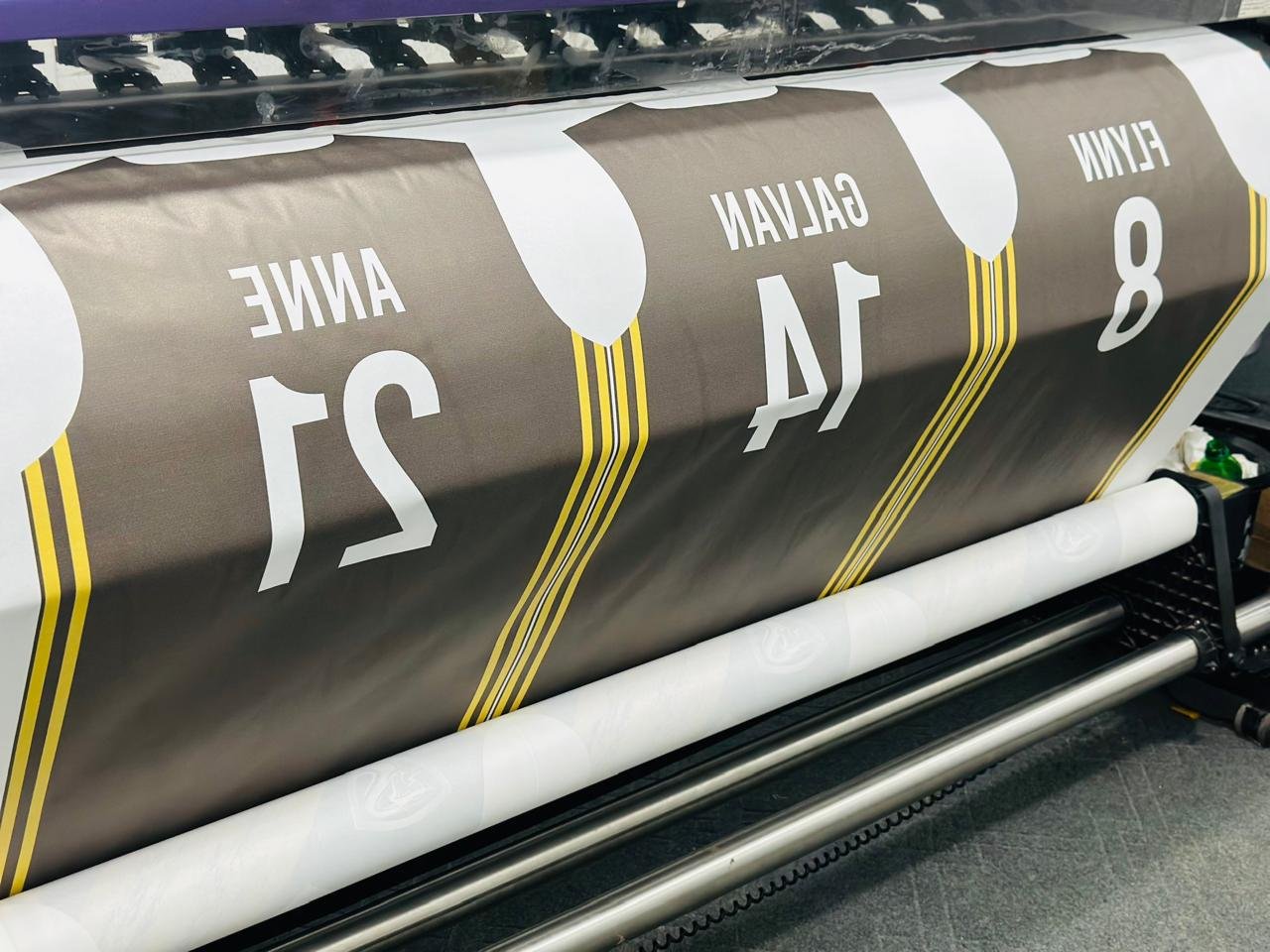
That is why a sublimation factory can genuinely offer no minimum while a screen printing shop cannot. It also explains two related things that surprise clubs. Unlimited colours cost nothing extra, because the print is one process regardless of how many colours are in the file. And player names and numbers are included, because every jersey is individually printed anyway, so a squad of twenty two individually named shirts is not twenty two exceptions, it is just the normal run.
The full explanation of how the dye bonds into the fibre is on the sublimation page.
What No Minimum Actually Changes for a Small Club
The absence of an MOQ is not a marketing line. It changes four specific decisions.
- You order what the squad needs, not what the factory needs. Eighteen players means eighteen shirts plus your chosen spares, rather than fifty shirts and a storage problem.
- You can order a single keeper kit. A goalkeeper kit is one or two garments per squad, which is exactly the quantity a minimum makes impossible.
- Mid season signings are solvable. One shirt, matching the original batch, is a normal order rather than a favour.
- You can test before you commit. A single production sample can be made, inspected, washed and stretched before you place the bulk run, and its cost is credited against the bulk order in most cases.
Low MOQ Does Not Mean Low Price Per Piece
This is the honest caveat. No minimum means you are allowed to order twelve shirts. It does not mean twelve shirts cost the same per piece as two hundred. Setup effort is still divided across the run, so the unit price improves as quantity grows even when nothing blocks a small order.
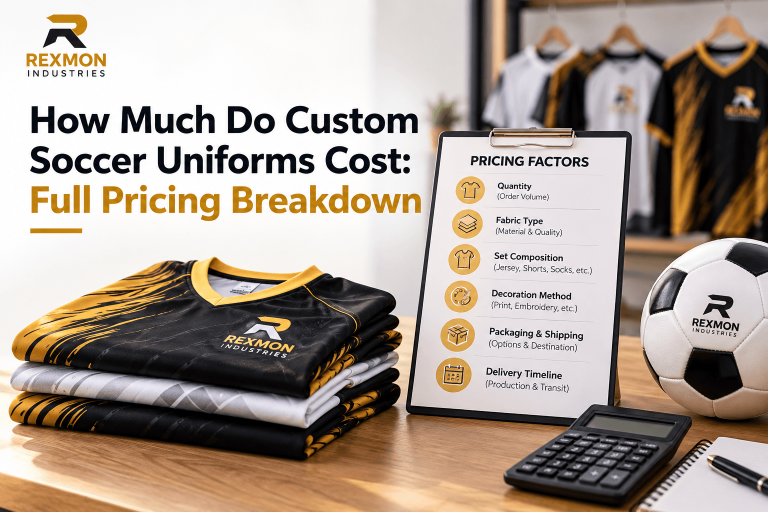
The useful move is to ask where the breaks fall rather than guessing. Tell the factory roughly what you need and ask for the next two price breaks above your number. Frequently the step from a squad count to the next break is small enough that the extra pieces become your spares at close to no additional cost per shirt. The complete breakdown of what moves the number sits in our pricing guide.
Reorders, Top Ups and Season Two
The other half of the MOQ question is what happens next year. A supplier with a high minimum effectively forces you to over order in season one, because a top up run will not be possible.
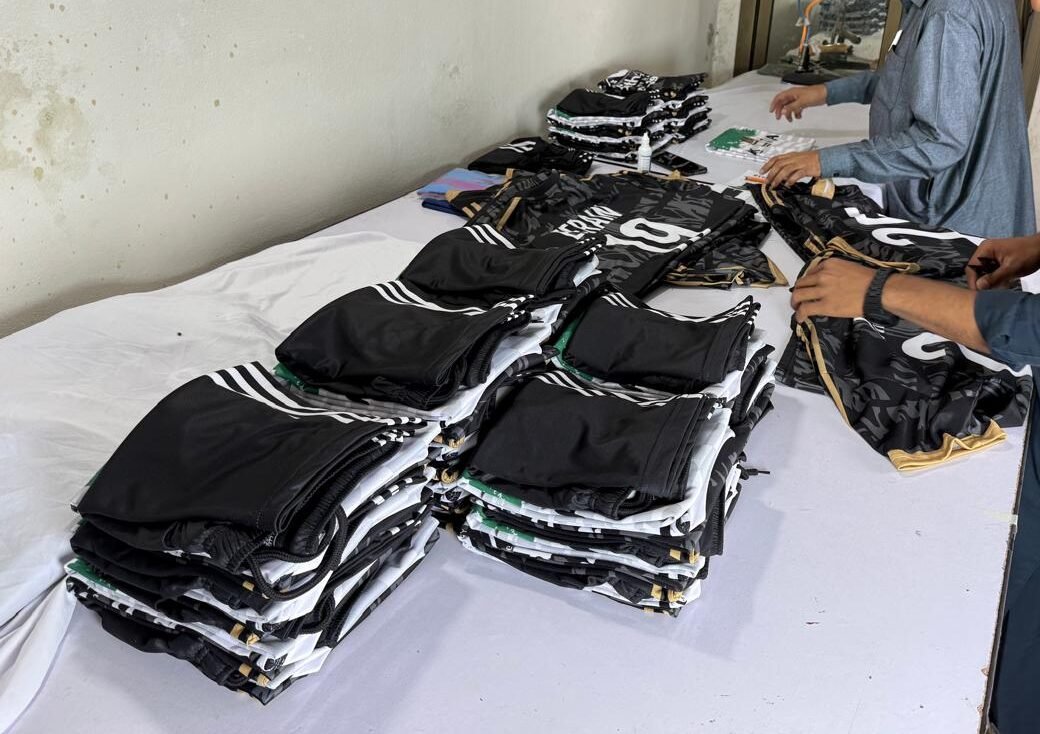
At Rexmon your artwork file, thread codes and graded pattern are stored under your account, so a top up run months later comes out identical to the original batch even if it is a single shirt. That removes the incentive to over order and lets a club buy the match kit now and add tracksuits or hoodies when the budget allows. Staging an order that way across a season is exactly what the youth club uniform budget guide is built around.
Questions to Ask About MOQ Before You Commit
If you are comparing suppliers, these five questions separate a genuine no minimum policy from a soft one.
- Is the minimum per design or per colourway, and does home and away count as two designs?
- Is there a screen charge, setup fee or artwork fee on top of the unit price?
- Do player names and numbers carry a per piece charge?
- Can we reorder a single piece next season, and is the pattern and artwork kept on file?
- What is the price at our squad count, and what are the next two breaks above it?
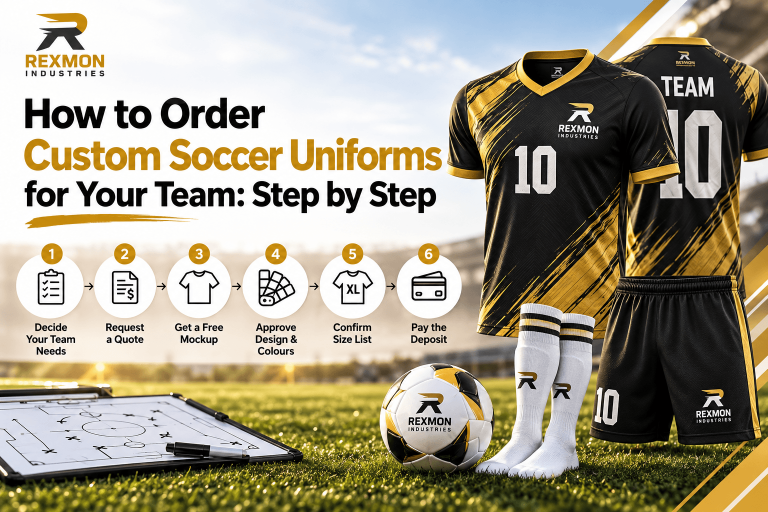
The longer vetting list, covering quality, timelines and what happens when something goes wrong, is in questions to ask a uniform supplier. When you are ready to move, the sequence from mockup to delivery is laid out in the step by step ordering guide.
Key Takeaways
- MOQ exists to cover fixed setup costs like screens, cutting markers and fabric rolls.
- Sublimation removes the screen charge entirely, which is why a no minimum policy is possible.
- Rexmon sets no minimum, so a single keeper kit or one replacement shirt is a normal order.
- No minimum is not the same as a flat price, and unit cost still improves with quantity.
- Ask whether a minimum is per design or per colourway, because home and away often count twice.
Frequently Asked Questions
Do we have to order a certain quantity?
No. You can order a single piece or a full club, and both go down the same line to the same standard. There is no screen charge and no setup fee.
Is the minimum counted per design or per colourway?
This is the question to ask any supplier, because many count each colourway separately and a home and away set then counts as two runs. At Rexmon there is no minimum either way.
Will twelve shirts cost the same per piece as two hundred?
No. Nothing blocks a small order, but setup effort is still spread across the run, so the unit price improves as quantity grows. Ask where the next two price breaks fall before you finalise the count.
Can we reorder a single shirt for a new player next season?
Yes. Your artwork file, thread codes and pattern are stored, so a single piece top up matches the original batch.
Can we order just one goalkeeper kit?
Yes. A single keeper kit is a normal order, which is exactly the case that a minimum order quantity usually makes impossible elsewhere.
Ready to Price Your Team Kit?
Send your crest, your rough idea and your quantity and Rexmon comes back with a full colour mockup within 24 hours and a written quote in about one working day. There is no minimum order, no setup fee and no screen charge, so a single keeper shirt and a 200 piece club order are both welcome.

5 Comments