

Youth Soccer Club Uniform Budget: How to Plan a Full Season
Youth clubs rarely fail on the cost of a shirt. They fail on the second order nobody budgeted for, the four players who joined in November, and the age group whose kit was bought by a volunteer who has since left. A uniform budget that survives a season is less about finding a cheaper price and more about deciding the order of purchase, the growth allowance and who owns the list.
Budget Per Player, Not Per Team
Teams change size. Players do not. A budget built on twelve teams collapses the moment two of them merge or an age group takes eight new registrations, whereas a per player figure scales cleanly and makes the subsidy conversation with parents concrete.
Build the spreadsheet with one row per age group and these columns: registered players, expected late joiners, match kit per player, off field items per player, spares, and total. Late joiners is the column most clubs omit and the one that causes the mid season problem.
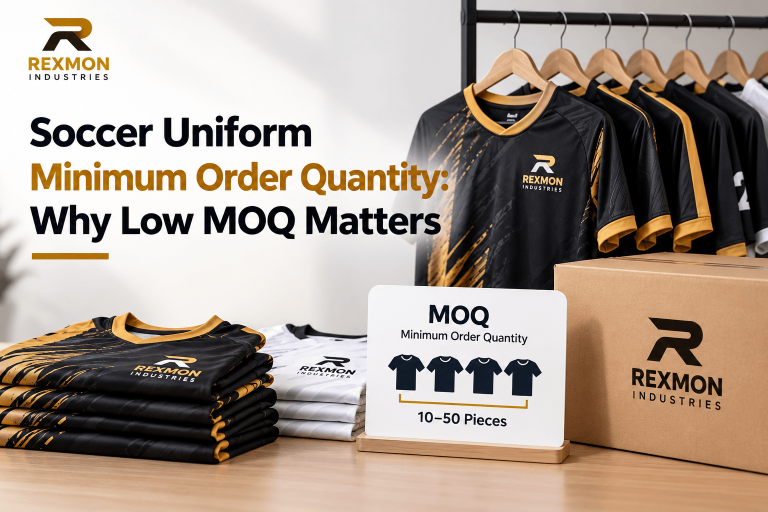
Because there is no minimum order quantity at Rexmon, a per player budget translates directly into an order. You buy eighteen shirts for eighteen players plus your chosen spares rather than rounding up to whatever a factory minimum demands. The reasoning behind that is in the minimum order quantity guide.
The Three Tier Kit List
Decide what belongs in each tier before you look at any prices, because doing it the other way round always ends with tracksuits bought and socks forgotten.
Tier one, the match day minimum. Every player needs it and the season cannot start without it.
- Home jersey with name and number
- Shorts and socks, usually cheapest as part of a full uniform set
- One contrasting goalkeeper kit per team
- Two to three spare shirts per age group in the middle sizes
Tier two, bought once the season is funded.
- An away or contrasting shirt for colour clashes
- Warmup jackets for cold weather arrivals
- Coaching staff tracksuits, which double as your touchline identity
Tier three, identity and optional extras.
- Team hoodies for travel and presentation days
- Kit bags, which are usually the cheapest visible branding per pound spent
- Training bibs and goalkeeper gloves
Stage the Order Across the Season
The instinct is to buy everything in one August order and be done. The better pattern for a youth club is three smaller orders timed against when money actually arrives.
- Pre season. Tier one for every registered player, plus spares. This is the only order that must land before the first fixture.
- Mid autumn. Tier two once registration fees have cleared and squad numbers have settled, plus the shirts for late joiners.
- New year. Tier three, funded by sponsorship or a club event rather than the core budget.
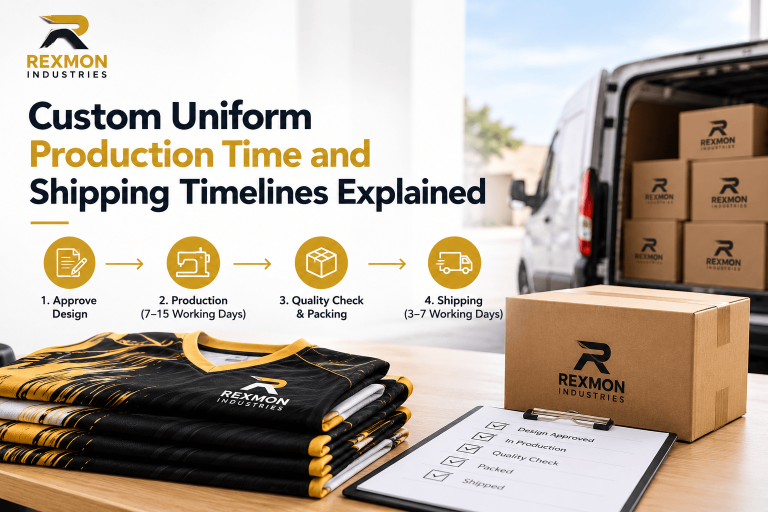
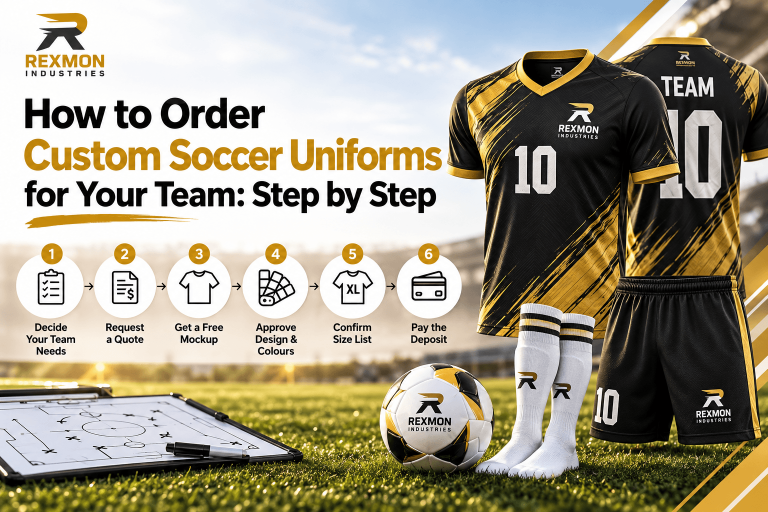
Staging only works if later runs match the first exactly, which is the part clubs worry about. Your artwork file, thread codes and graded pattern are stored under your account, so a top up months later comes out identical to the original batch even when it is a single shirt. The order sequence for each of those runs is the same six stages described in the ordering guide.
Growth, Late Joiners and the Spares Policy
Youth kit has a problem adult kit does not. Players grow mid season, and a shirt that fitted in September can be tight by March. A written spares policy handles it without a panic order.
- Hold two to three spare shirts per age group, always in the two most common sizes for that group.
- Size up rather than down when a player is between rows, because a generous fit lasts longer.
- Log every spare issued against a player name so the stock count stays honest.
- Recover kit at season end from players moving up, and inspect it before promising it to anyone.
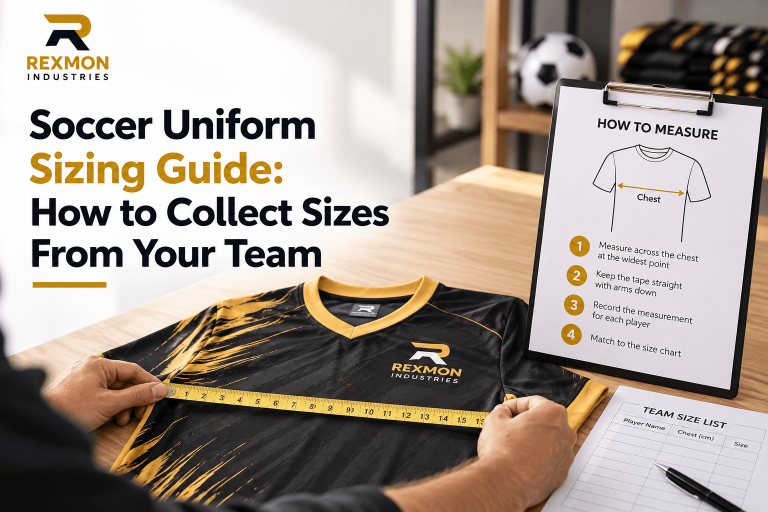
The measurement method that makes this work, including the shared sheet that stops duplicate squad numbers, is in the soccer uniform sizing guide. Charts for every youth size are on the size guides page, and a size ratio can be built from your squad measurements free of charge before you order.
Funding the Budget Without Raising Fees
Most youth clubs have more funding options than they use, and kit is the easiest thing in the club to attach a sponsor to because it is visible every week.
- Shirt sponsorship. A local business on the front of eighteen shirts seen weekly is genuinely good value, and full sublimation means adding a sponsor logo costs nothing extra in print.
- Sleeve and back sponsors. Sell separately from the front, since extra print positions are free on sublimated kit.
- Tiered parent contribution. Match kit covered by the club, off field items optional and parent funded.
- Age group fundraising. Ring fence what each group raises for its own tier two and three items.
One caution. Confirm sponsor artwork is the current version and that you have written permission to use it before artwork approval, because a logo change after day zero is a remake rather than an edit.
A Budget Checklist That Survives Handover
Volunteers change. The budget has to outlive them, so write these down in one shared document rather than in an individual's inbox.
- The per player tier one figure and what it includes
- The current squad list with sizes, updated at least twice a season
- The spares count held, by age group and size
- Sponsor commitments with end dates and artwork files
- The supplier contact, your account reference and the stored design names
- The reorder lead time, so the next volunteer does not order in the week of the first fixture
For the cost drivers behind each figure see the pricing breakdown, and if your club is buying across many teams at once, the volume approach is in bulk orders for leagues and tournaments.
Key Takeaways
- Budget per player rather than per team, and include a column for expected late joiners.
- Split the kit list into three tiers and fund them in that order across the season.
- Hold two to three spare shirts per age group in the middle sizes as a written policy.
- Stored artwork and patterns mean a staged second order matches the first exactly.
- Sponsor logos and extra print positions cost nothing extra on sublimated kit, so sell them separately.
Frequently Asked Questions
How many spare shirts should a youth team hold?
Two to three per age group, in the two most common sizes for that group. That covers growth, trialists and damage without tying up budget in sizes nobody needs.
Does splitting an order across the season cost more?
Only in the sense that each run is priced at its own quantity. It costs nothing in consistency, because artwork, thread codes and the graded pattern are stored so later runs match the original batch.
Should we order by age or by measurement?
By measurement, always. Two players of the same age can be several inches apart across the chest, so an age based order guarantees a handful of poor fits.
Does adding a sponsor logo cost extra?
Not on sublimated kit. The design is printed as one process, so extra logos and extra colours carry no additional print charge. Embroidered garments are priced by stitch count instead.
Can parents order their own items separately?
Yes. Because there is no minimum order, optional off field items can be run as a smaller separate order rather than being forced into the club's main run.
Ready to Price Your Team Kit?
Send your crest, your rough idea and your quantity and Rexmon comes back with a full colour mockup within 24 hours and a written quote in about one working day. There is no minimum order, no setup fee and no screen charge, so a single keeper shirt and a 200 piece club order are both welcome.

3 Comments