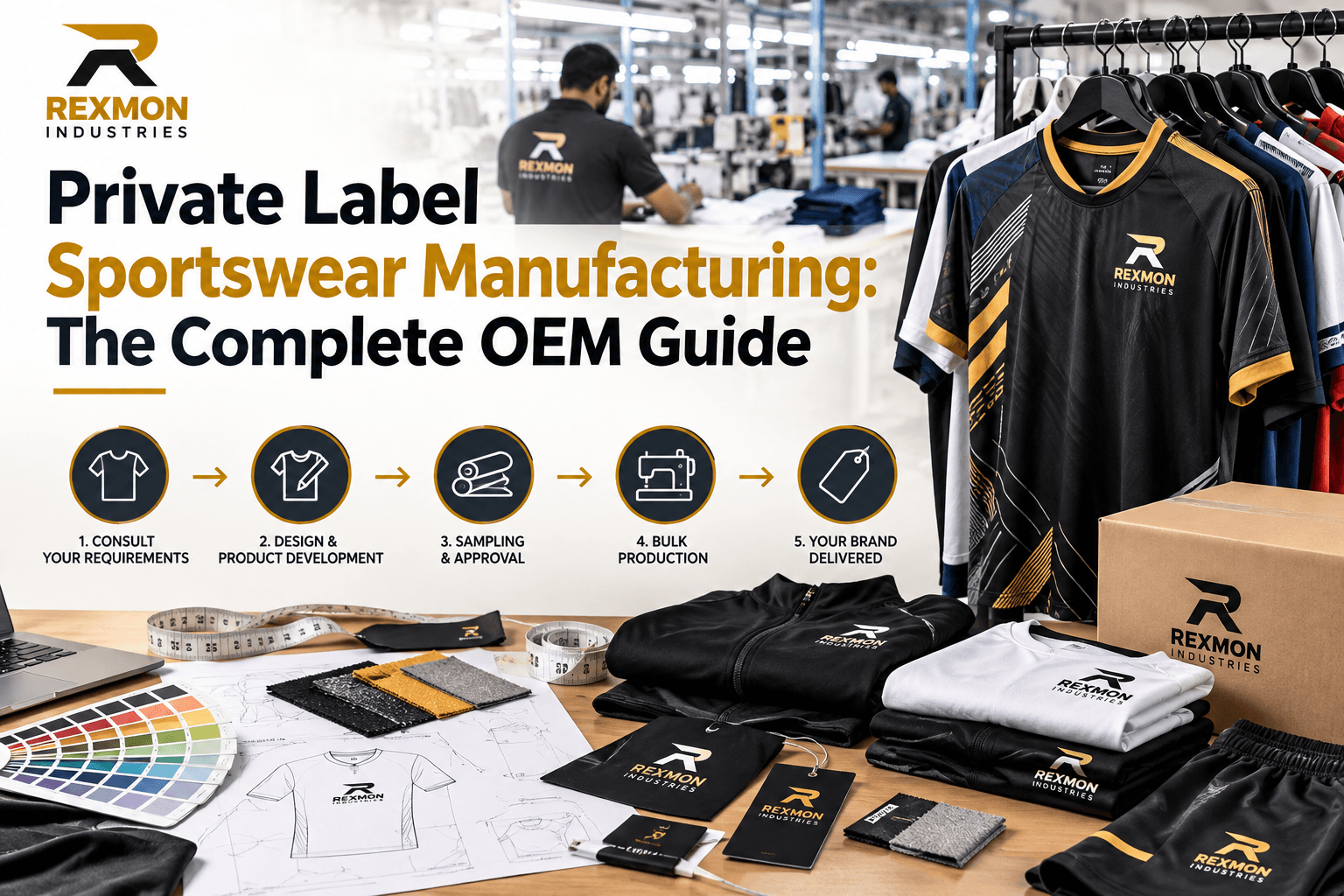
Private Label Soccer Wear Manufacturing: The Complete OEM Guide
Starting an apparel label is mostly a manufacturing question wearing a marketing costume. The logo, the website and the launch plan are all reversible. The factory relationship is not, because it decides your margin, your lead time and whether your second production run looks like your first. This guide covers how private label soccer wear manufacturing actually works, what to specify, and how to judge a factory before you commit.
What Private Label Manufacturing Actually Means
Private label means the factory builds the product and you sell it as your own brand. From the fabric up, every piece is made to your specification and then finished with your labels, tags and packaging so it arrives ready for your customers. Nothing leaves the factory carrying the manufacturer's name unless you ask for it.
Three terms get used interchangeably and should not be.
| Model | Who designs | Best for |
|---|---|---|
| OEM | You supply the design and specification | Brands with a clear product vision |
| ODM | The factory supplies an existing design you rebrand | Fast launches and market testing |
| Private label | Either, finished under your branding | Any brand selling under its own name |
In practice most new labels start closer to ODM, adapting proven patterns, and move toward full OEM as they learn what their customers actually buy. There is nothing wrong with that path and it is considerably cheaper than developing original patterns for a range that has not been validated.
What You Can Brand, and What It Costs
Branding a garment is not one decision. It is a list, and the more of it you specify up front the closer the first sample lands.
- Woven or printed neck labels carrying your brand mark
- Size tags and care labels with your wash instructions and composition
- Neck or sleeve branding printed into the garment
- Hang tags with your artwork and barcodes
- Polybags, branded boxes and cartons so stock arrives retail ready
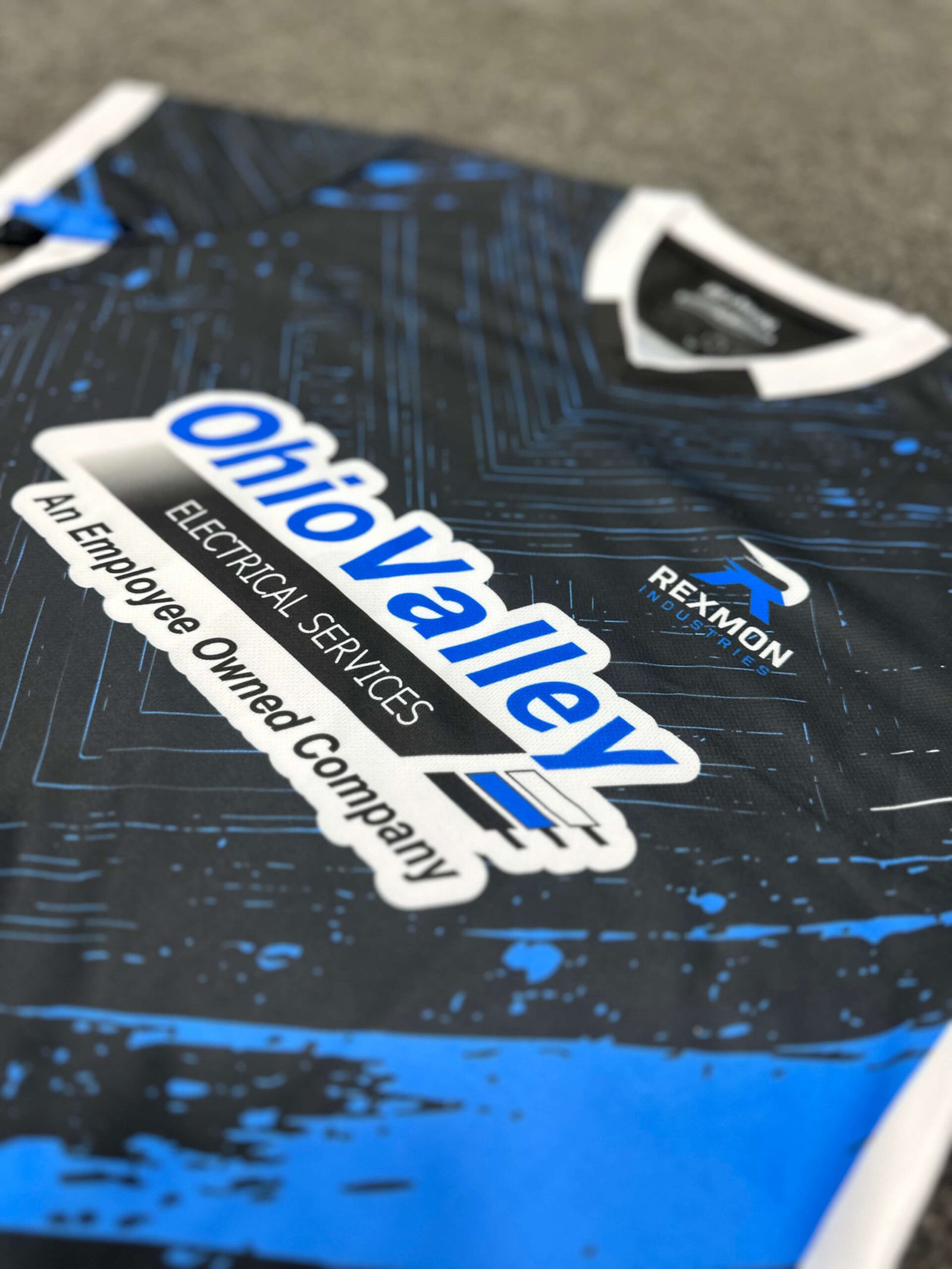
On sublimated garments the in fabric branding is effectively free, because the design is printed as one process regardless of how many colours or logo positions it carries. The costs that do exist are physical: woven labels, hang tags, barcodes and packaging are all bought items with their own minimums, which is why they should appear in your first brief rather than as an afterthought. The full service list is on the OEM and private label page.
The Five Stage Manufacturing Sequence
Every private label programme runs the same way.
- Send your brief. Designs, specifications, labels and target quantities.
- Sampling. A physical sample is produced so you can approve fit, fabric and print before committing.
- Approval. You sign off the sample and the colours, in writing, against Pantone references and a printed strike off.
- Bulk production. Your order is manufactured under the full inspection process.
- Branded and shipped. Finished, labelled and packaged in your branding, then shipped to your warehouse or direct to your customers.
Do not compress stage two. Skipping the sample to save a fortnight is the most expensive decision available to a new brand, because the alternative to finding a fit problem on one garment is finding it on five hundred.
Specifying Fabric Properly
Fabric is where new brands under specify and later cannot explain to a customer why the second batch feels different. Name the fabric and the GSM in your brief, every time.
| Fabric | Weight | Typical product |
|---|---|---|
| Micro mesh | 130 to 150 GSM | Hot climate performance jerseys |
| Interlock | 140 to 160 GSM | Match jerseys with fine print detail |
| Bird eye mesh | 150 to 170 GSM | Training tops and bibs |
| Pique | 170 to 200 GSM | Polos and lifestyle pieces |
| Tricot and spandex | 180 to 220 GSM | Compression and tight fit bottoms |
| Brushed fleece | 260 to 320 GSM | Hoodies and tracksuits |
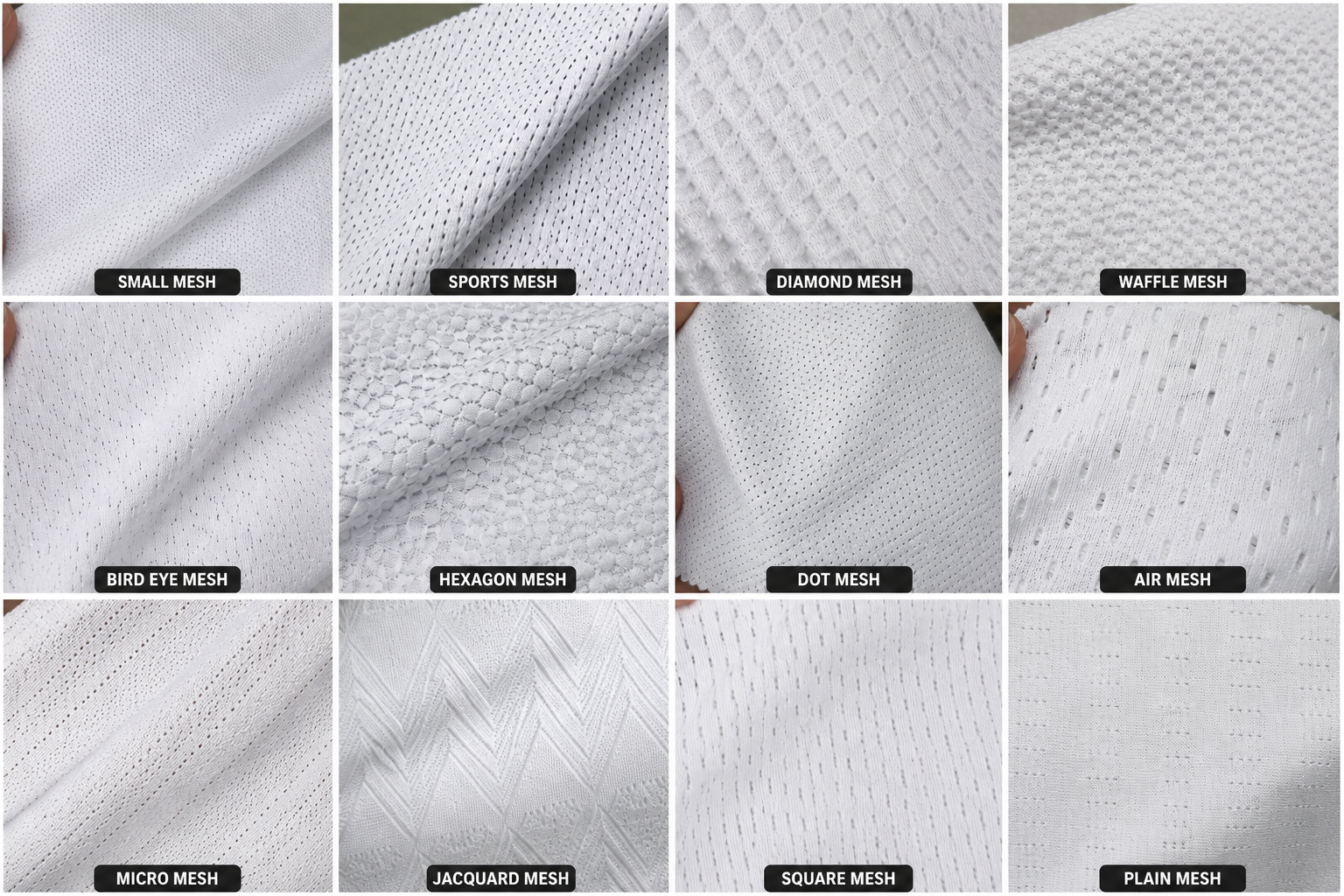
Every fabric Rexmon runs is 100 percent polyester on the face, which is what allows the dye to bond inside the fibre rather than sitting on top of it. That is why a sublimated print does not crack, peel or fade, and why wash tests return grade 4 to 5 colour fastness. Swatches are posted free before you commit, and the comparison table is on the fabrics page.
Quality Control at Brand Scale
For a club, one faulty shirt is an annoyance. For a brand it is a refund, a review and a returns cost, so the inspection question carries more weight.
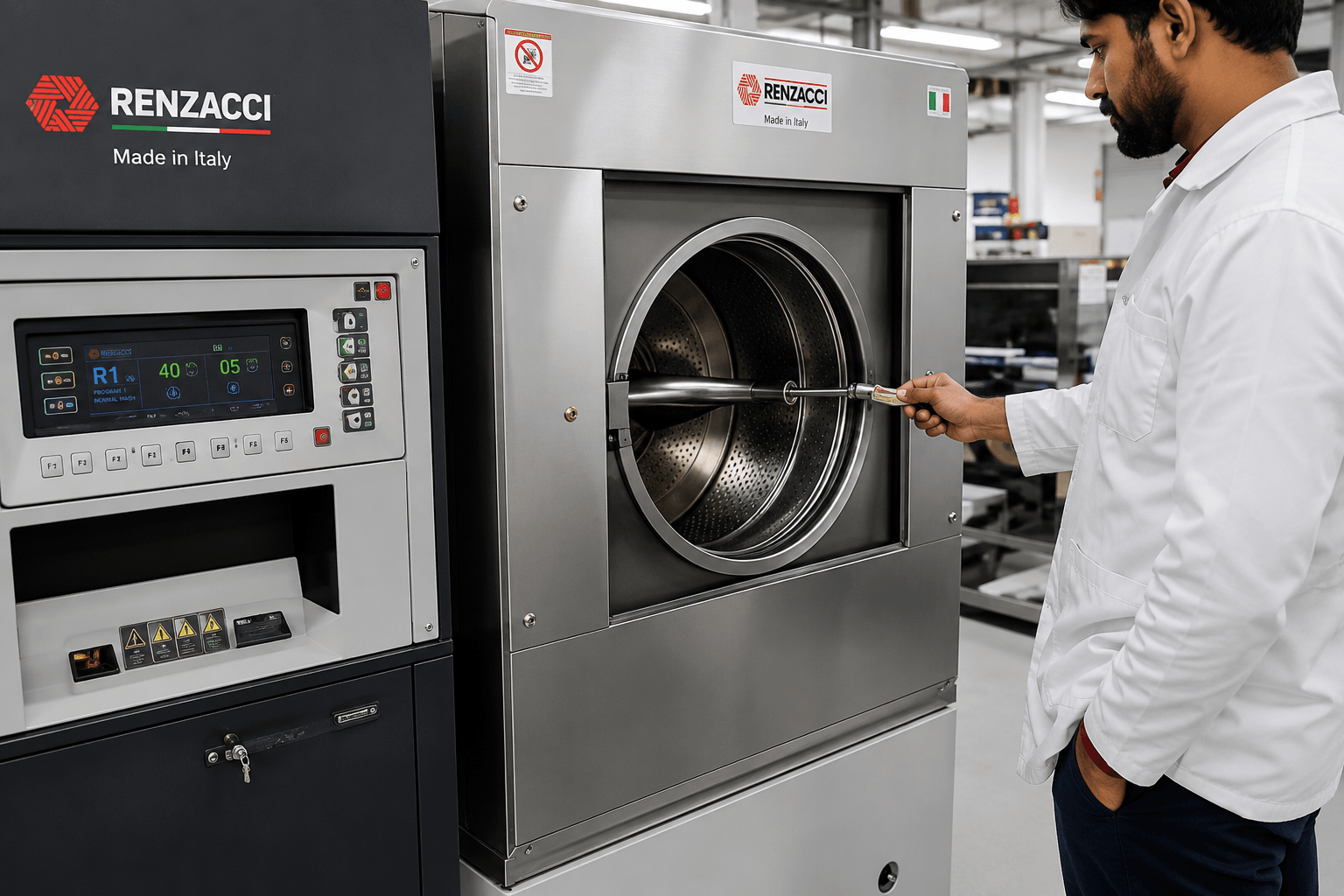
Rexmon runs AQL 2.5 inspection across seven checkpoints. Incoming fabric is checked on a light table against a four point system, a strike off is approved against your Pantone references under D65 daylight, cut panels are measured against the graded pattern for every size with heat press shrinkage factored in, a floor inspector samples the line hourly for seam strength and stitch density, pieces from each lot are wash and durability tested, every finished garment is inspected individually before folding, and cartons are audited against the packing list before sealing. The tracked figures are 99.2 percent right first time, a bulk defect rate under 0.8 percent, 98.6 percent on time dispatch and a reorder complaint rate under 1 percent. The full ladder is on the quality control page.
Starting Small and Scaling Up
The advice new brands most need is the least profitable advice to give them, which is to order less than they think for the first run.
A first production run exists to answer questions: which sizes actually sell, which colourway moves, whether the fit suits your customer. Ordering deep before those answers arrive converts cash into stock you cannot shift. Start small enough to test the market, then scale volumes as the brand grows and take the price breaks that come with it. There is no minimum order at Rexmon, so a small first run is a normal order rather than a favour, and the same logic that applies to club orders in the minimum order quantity guide applies here.
Plan the second run before the first sells out, because production is seven to fifteen working days plus freight and a stockout lasts longer than either.
Costs, Terms and Logistics
Three commercial points decide whether your margin survives contact with reality.
- Price breaks. Ask where the next two breaks sit above your planned quantity, and model your retail price against both.
- Payment terms. Fifty percent deposit to start production and the balance before dispatch is standard, with larger accounts reviewed for other terms.
- Freight and duties. Air freight at seven to twelve working days suits early runs, sea freight at twenty five to forty five days is the lowest cost per unit for planned volume. Duties are normally the buyer's responsibility, with a duty paid price available on request. Details are on the shipping and returns page.
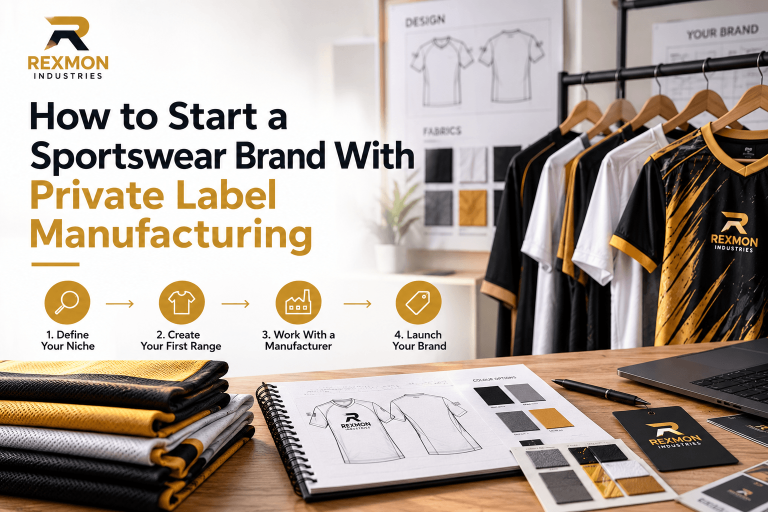
Build landed cost, not factory cost, into your pricing. The number that matters is what the garment costs sitting in your warehouse, and the practical walkthrough for a first time brand is in how to start a soccer wear brand with private label manufacturing.
Choosing a Manufacturing Partner
The vetting questions are similar to those a club should ask, with three additions that matter specifically to a brand.
- Do you own the factory? Brokers add a margin and remove your visibility of the line. Ask for a factory tour and named references.
- Will you produce entirely under our brand? The answer should be that nothing leaves with the manufacturer's name on it unless you want it there.
- Will you copy another brand's product? A factory that says no is protecting you as much as them, because the same discipline applies to your designs in front of the next client.
The full list of questions, including lead times and faulty goods policy, is in questions to ask a uniform supplier. If you are buying for a club rather than a brand, start instead with the step by step team ordering guide.
Key Takeaways
- Private label means the factory builds to your specification and finishes the goods under your branding.
- OEM, ODM and private label are not interchangeable terms, and most new brands start closest to ODM.
- Name the fabric and the GSM in every brief, because under specifying is what makes batch two feel different.
- Never skip sampling, since a fit problem found on one garment is cheaper than on five hundred.
- Order a first run small enough to answer which sizes and colourways actually sell, then scale into the price breaks.
Frequently Asked Questions
What is the difference between OEM and private label?
OEM describes who supplies the design, which is you. Private label describes whose brand the finished goods carry, which is also you. ODM sits between them, where the factory supplies an existing design that you rebrand.
How small can a first order be?
Small enough to test the market before committing to volume. Share your range and target quantities and the price breaks as your volumes grow will be confirmed alongside the quote.
Can we use our own labels, tags and packaging?
Yes. Woven or printed neck labels, hang tags, care labels, barcodes and branded packaging are all part of the private label service, and nothing ships with the manufacturer's name unless you ask for it.
Will you copy another brand's product?
No. Another company's logo, crest or protected design will not be reproduced. An original design that achieves the look you are after can be developed instead.
How long does a private label run take?
Club sized runs are seven to fifteen working days from approval. Larger OEM programmes take longer and the exact date is confirmed in writing before production starts, plus freight.
Do you ship direct to our customers?
Yes. Tracked delivery is available to your warehouse or straight to your customers, and orders can be packed and labelled individually where that suits your fulfilment model.
Manufacture Under Your Own Label
Rexmon produces soccer wear under your brand from our own factory in Sialkot, with your woven labels, hang tags, care labels and packaging. Send your range and target quantities and we will confirm sampling, price breaks and lead times in writing before anything is cut.
2 Comments