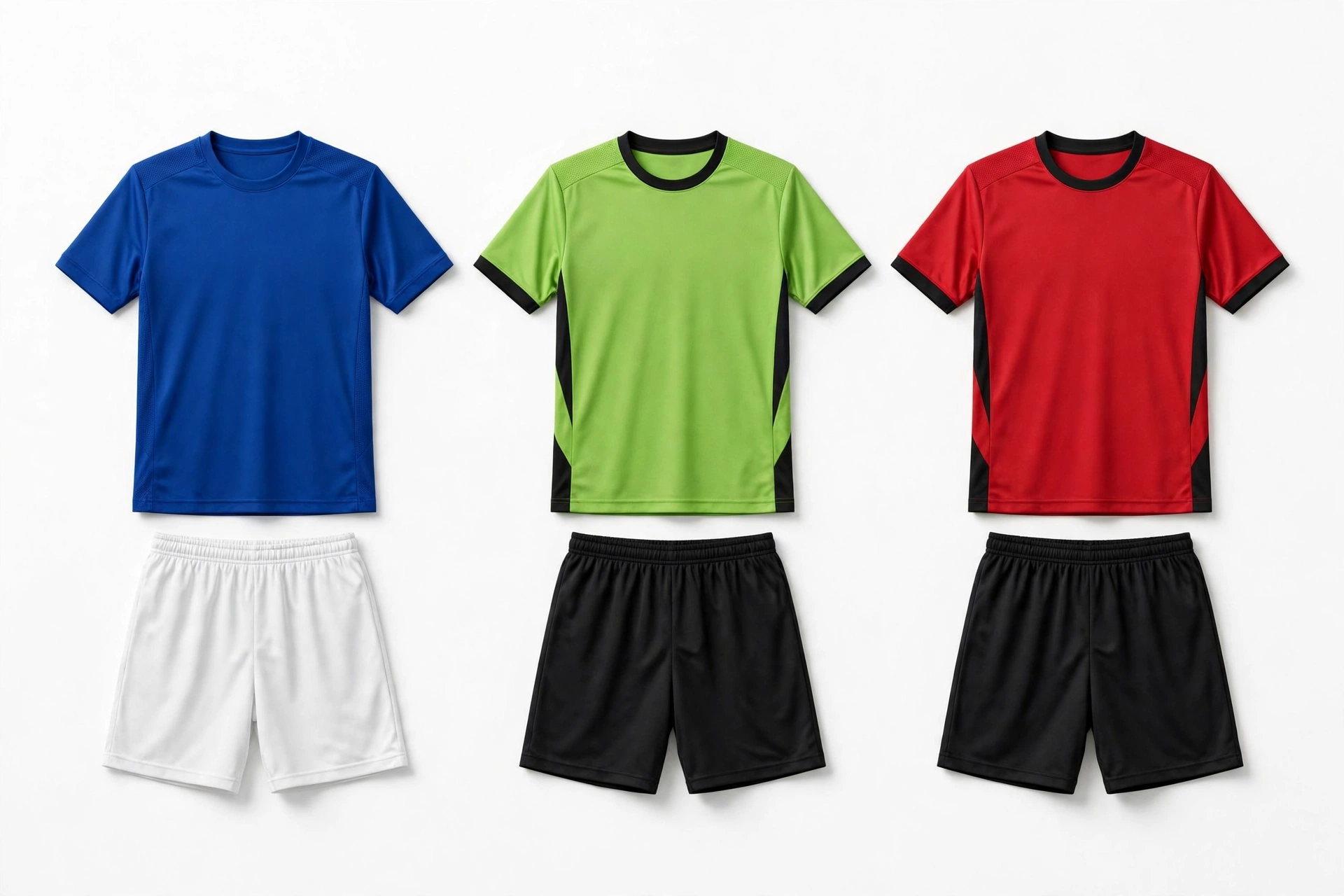
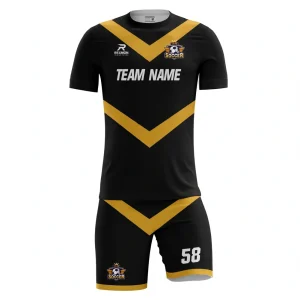
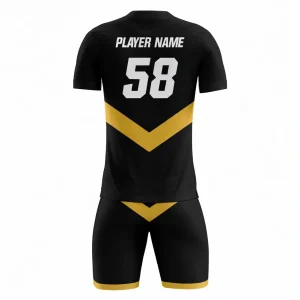
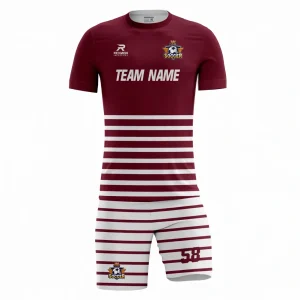
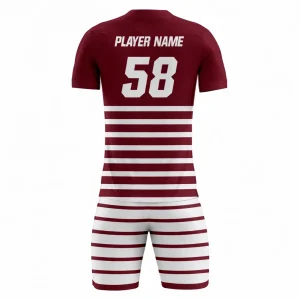
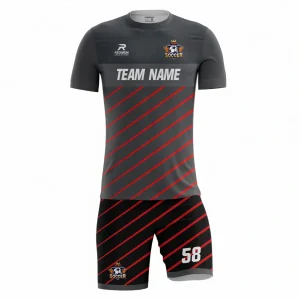
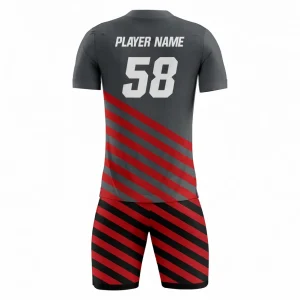
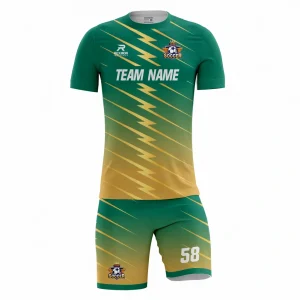
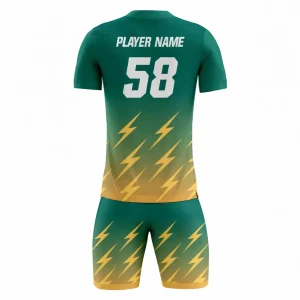
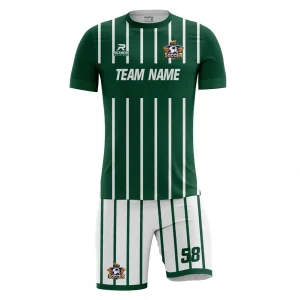
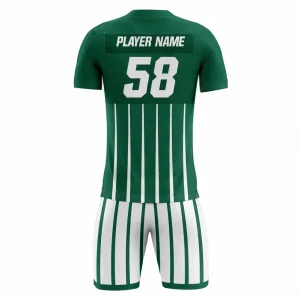
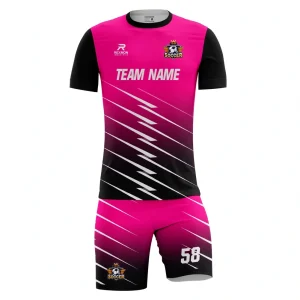
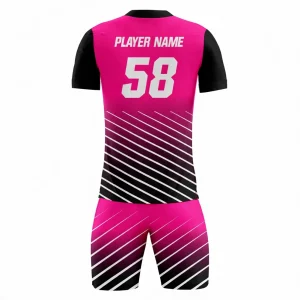
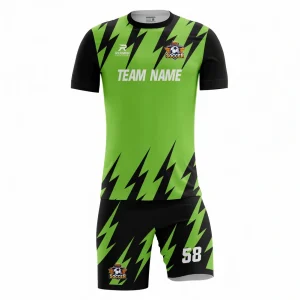
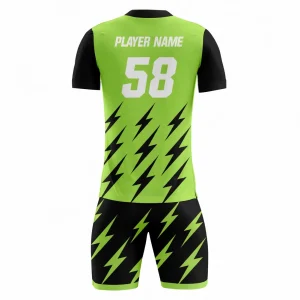
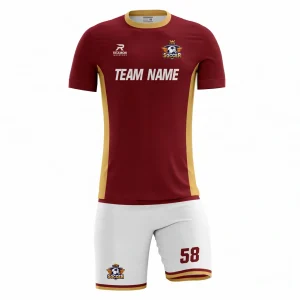
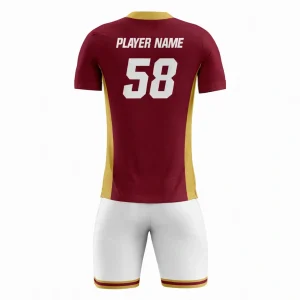
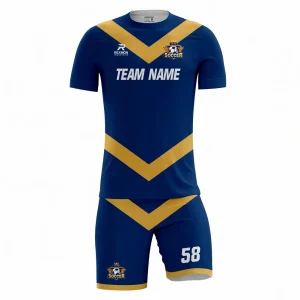
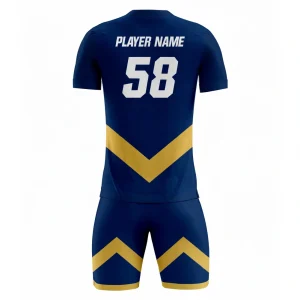
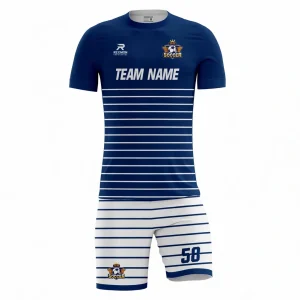
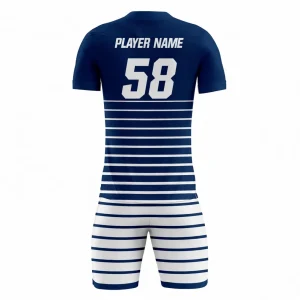
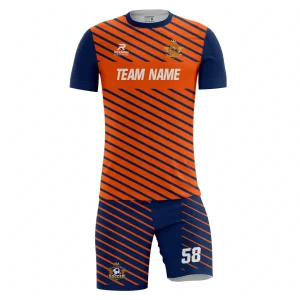
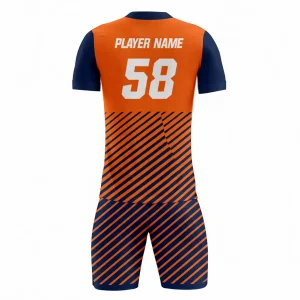
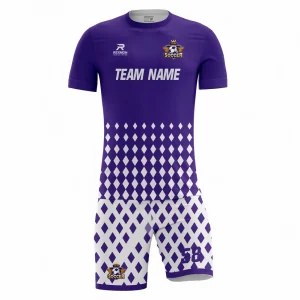
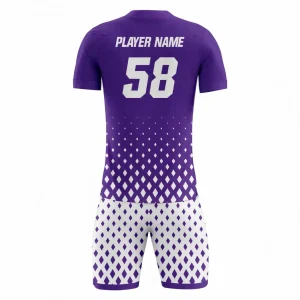
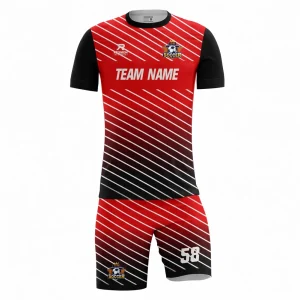
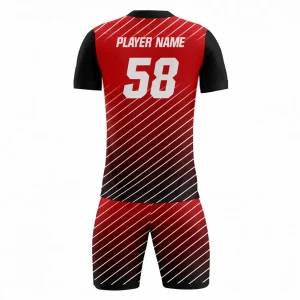
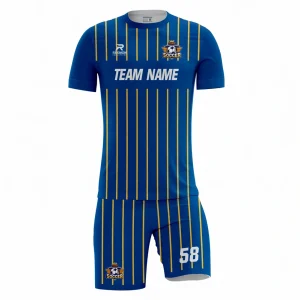
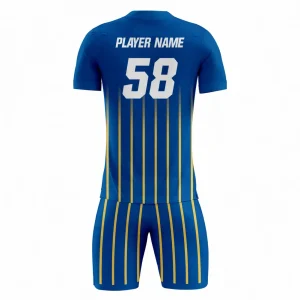
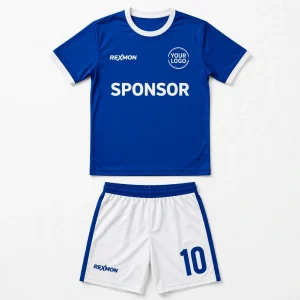
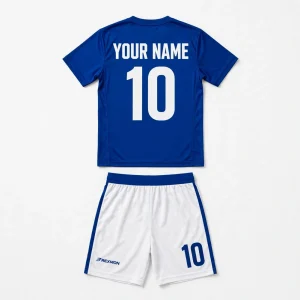
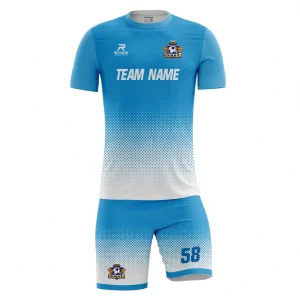
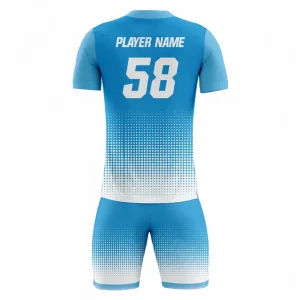
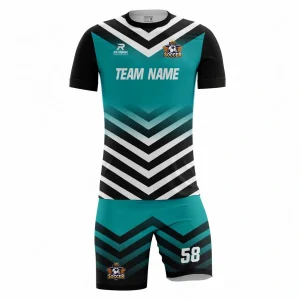
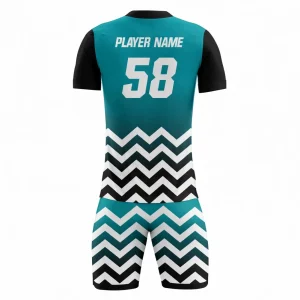
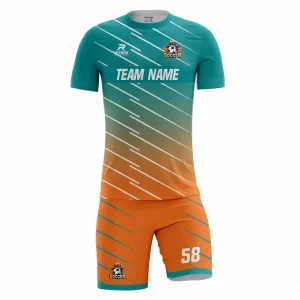
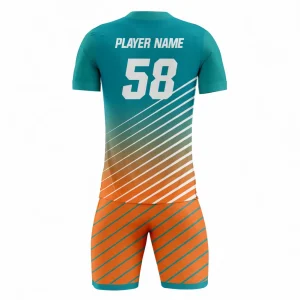
A youth soccer uniform has to do two jobs at once. It has to survive a season of sliding, washing and growing, and it has to make a group of six year olds look like a team on their first morning together. Rexmon Industries manufactures custom youth soccer uniforms in its own factory in Sialkot, Pakistan, for clubs, academies, schools and rec leagues across the United States and worldwide. Every kit is fully sublimated, which means the design, crest, sponsor, player names and squad numbers are dyed into the polyester itself rather than printed on top of it, so nothing cracks, peels or fades across a season of play.
Coaches order one design for the whole squad and mix every size in a single run, from the smallest U6 player to the oldest U18. Parents pay only for their own child, names and numbers are locked from one shared roster sheet, and a free mockup lands within 24 hours of sending your details. Production takes 7 to 15 working days once the design and the size list are approved, and there is no minimum order, so a team of eight and a club of eighty go down the same line.
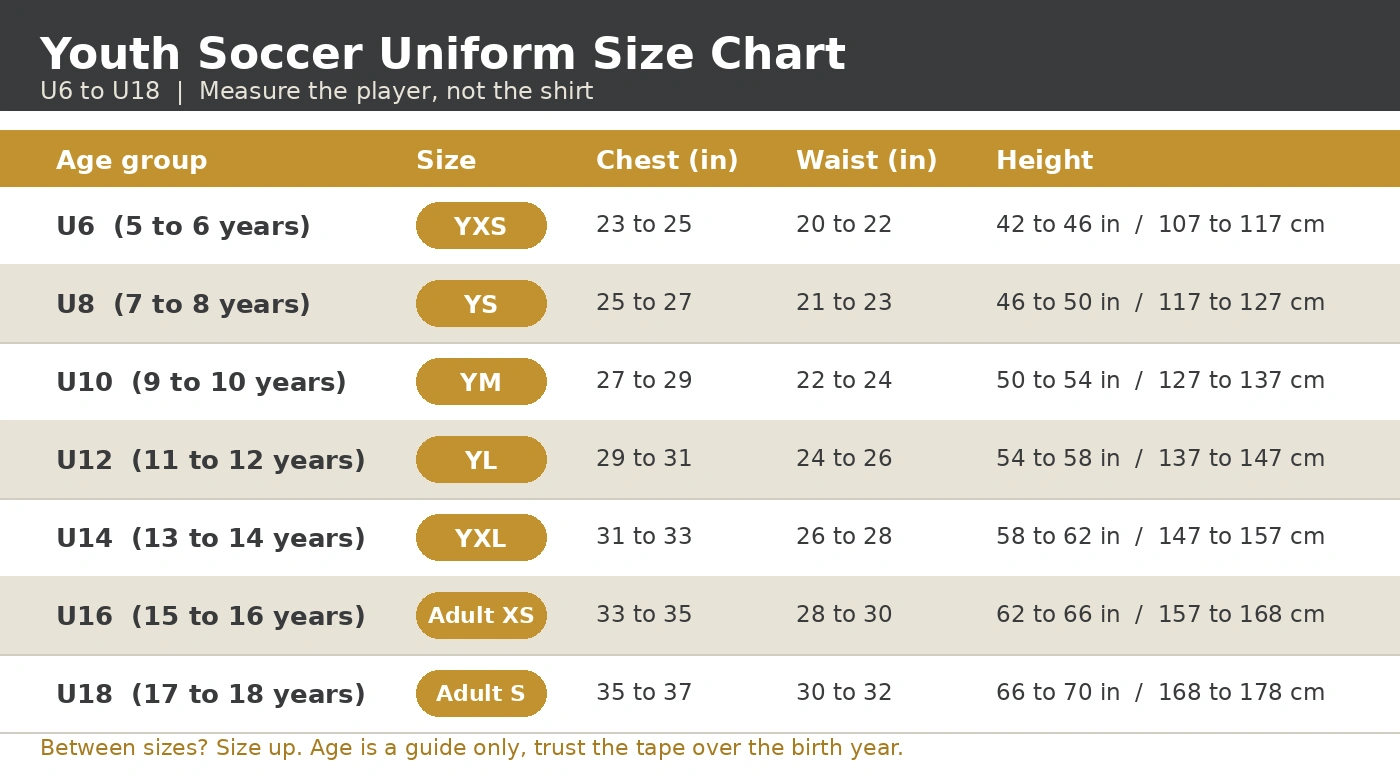
Youth Soccer Uniform Size Chart, U6 to U18
Most youth sizing charts list a size and a chest measurement and leave the coach to guess the rest. A U10 player and a U12 player can share a chest measurement and still need different shirts, because height, waist and growth move at different speeds between five and eighteen. This table uses player body measurements, so measure the player, not the shirt.
| Age group | Size | Chest (in) | Waist (in) | Height (in / cm) |
|---|
| U6 (5 to 6 years) | YXS | 23 to 25 | 20 to 22 | 42 to 46 / 107 to 117 |
| U8 (7 to 8 years) | YS | 25 to 27 | 21 to 23 | 46 to 50 / 117 to 127 |
| U10 (9 to 10 years) | YM | 27 to 29 | 22 to 24 | 50 to 54 / 127 to 137 |
| U12 (11 to 12 years) | YL | 29 to 31 | 24 to 26 | 54 to 58 / 137 to 147 |
| U14 (13 to 14 years) | YXL | 31 to 33 | 26 to 28 | 58 to 62 / 147 to 157 |
| U16 (15 to 16 years) | Adult XS | 33 to 35 | 28 to 30 | 62 to 66 / 157 to 168 |
| U18 (17 to 18 years) | Adult S | 35 to 37 | 30 to 32 | 66 to 70 / 168 to 178 |

How to measure a child
Take three measurements with a soft tape, over a light shirt, while the player stands straight. Chest: around the widest part, under the arms, level all the way round. Waist: around the natural waist, just above the hip bones. Height: back flat against a wall, feet together, head level. The jersey is ordered to chest and the shorts to waist, and the two do not always land in the same size.
The between-sizes rule
If a player falls between two sizes, size up. A shirt that fits exactly in August is tight by November. Age is a guide only: two U10 players can be a full size apart, so trust the tape over the birth year. U16 and U18 players usually move into adult sizes, so the last two rows use adult XS and adult S, and our main custom soccer uniforms range carries the same designs in adult sizes.
How Parent-Pays Split Ordering Works
Team kit used to be paid for in one lump sum by the coach, who then spent the season chasing parents for their share. Parent-pays split ordering turns that around. One team order is placed as a single run, and each parent pays only for their own child. The factory still cuts, prints and packs the whole squad together, so every shirt matches.
It starts with a single roster sheet: player name, squad number, size, and the parent name and contact for each player. That sheet is the only source of truth. Names and numbers are taken from it exactly as written, so the spelling on the sheet is the spelling on the shirt. This is the spelling lock. Read every surname back to the parent before the sheet is sent, and check every squad number against the league registration list.
Set the parent deadline a full week before the real deadline. Parents who pay early are confirmed the same day. If a parent misses the deadline, the order is not held: the covered players go into production, and the missing player is added as a second run from the same artwork and dye lot records. Late joiners work the same way: one shirt for one new player is a normal order. The full guide to minimum order quantity explains how that works in practice.
Fabric and Construction, Built for Youth Players
A youth kit is washed more often and treated more roughly than an adult kit, so the fabric and the stitching carry more of the work. We cut youth uniforms from three polyester fabrics, chosen by climate and use.
| Fabric | Weight | Feel | Best for |
|---|
| Mesh | 130 to 150 GSM | Open weave, maximum airflow | Hot weather and summer tournaments |
| Smooth interlock | 160 to 190 GSM | Smooth, matte, structured | Everyday match and training kits |
| Tricot | 150 to 180 GSM | Soft hand, slight stretch | Cooler weather and layered kits |
Smooth interlock is the default for most youth teams, because it holds its shape and takes a sharp print. Mesh is the pick for hot weather, and tricot suits cooler weather and layered kits. All three are moisture wicking polyester with four-way stretch.
The design is applied by full sublimation: artwork is printed onto transfer paper, laid against the fabric, and run through a heat press, where the dye turns to gas and bonds into the polyester fibres. There is no layer on top, so a sublimated youth soccer uniform cannot crack, peel or stiffen the way a heat pressed vinyl number does. Names and numbers are sublimated the same way.
Hems are double-needle stitched, seams are coverstitched, and stress points such as the collar join and shorts vents are bartacked. Cut panels are measured against the graded pattern, with a working tolerance of plus or minus one inch on youth chest and waist, the same tolerance stated in our ordering guide. Your artwork, thread codes, dye lot and pattern are stored under your account, so a shirt ordered months later is printed from the same artwork and matched to the original batch.
Care and Durability, Keeping a Kids Kit Looking New
Youth kits live a harder life than adult kits: slid on in a rush, dragged across turf, left in a bag overnight, and washed far more often. Sublimation is the reason a Rexmon kit survives: the design is inside the fibre rather than on top of it, so the shirt will not fade, crack or peel with normal washing.
Wash the kit cold, inside out, on a gentle cycle, and hang it to dry. Cold water protects the fibre and the dye bond, and air drying keeps the fabric from shrinking. Never use bleach, and never use a high-heat dryer setting. Grass and mud stains come out with a cold soak before the wash. Do not iron directly on the printed areas.
Plan for growth as well as for wear. Order the between-sizes player one size up, keep one spare in the two most common sizes, and remember that a handed-down kit will still carry the same colours, because the dye does not wash out.
From Mockup to First Game, Ordering and Turnaround
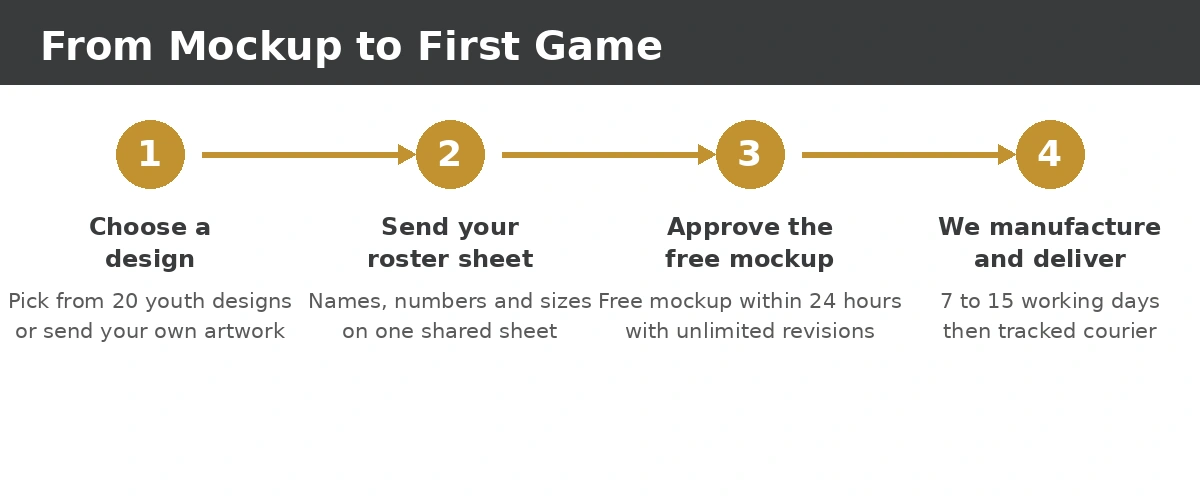
The timeline works backwards from the first game. The sequence is short: choose a design, send your roster sheet, approve the free mockup, and we manufacture and deliver. Your free mockup arrives within 24 hours, production takes 7 to 15 working days once the design and size list are approved, and delivery follows by tracked courier.

| First game | Approve your design by |
|---|
| Saturday 7 March | Friday 30 January |
| Saturday 21 March | Friday 13 February |
| Saturday 4 April | Friday 27 February |
| Saturday 15 August | Friday 10 July |
The gap between the approve-by date and the first game covers production, transit, customs clearance and a buffer for one revision. The two things that move a delivery date are a late roster and a late approval, so collect sizes in parallel with the mockup and approve the artwork on a real screen rather than a phone. If your first game falls outside these dates, count back five weeks. The full six-stage ordering process is laid out in our step by step ordering guide.
League Rules, Numbers and Home and Away
Youth leagues set their own uniform rules, and a kit that breaks them is a kit a child cannot wear on match day. US Youth Soccer, AYSO and US Club Soccer all require that the two teams be clearly distinguishable, that the goalkeeper wears a colour distinct from both teams and the referee, and that squad numbers are legible from the touchline. Check your league handbook before approving the design.
The main squad number goes on the back, large and centred, with the player surname above it where the league allows it. The number must contrast with the shirt behind it, or it will fail a referee check. A team that plays home and away needs two colourways that cannot be confused with each other. Shorts for youth players carry no pockets, which is a safety rule: pockets catch fingers in a tackle.
Girls Fit, Youth Goalkeeper Kits and Companion Items
Girls do not all want the same cut, and a girls team should not have to wear a boys shirt with a different label. Our girls cut is shaped through the waist with a shorter body and a shorter short, and it is available in every youth size on this page.
The youth goalkeeper needs a different kit, and the rules say so. Under IFAB Law 4 the goalkeeper must wear colours that distinguish them from both teams and the match officials, so a keeper kit is a contrasting colourway that still carries the same crest, sponsors and pattern language. Youth keeper shirts add foam padding at the elbows and hips, and our goalkeeper kits range carries the same youth sizes.
Companion items follow the age of the player. Socks are ordered to the same size block as the kit, shin guards are sized by height rather than age, and the match ball size changes with the age group: Size 3 for U6 and U8, Size 4 for U10 and U12, and Size 5 from U14 upward.
Included With Every Youth Uniform
- A matching jersey and shorts in one design, sublimated from one artwork
- Player names, squad numbers, crest and sponsor logos printed into the fabric
- A free digital mockup within 24 hours, with unlimited revisions
- No minimum order, from a single piece to a full club
- Youth sizes YXS to YXL, with adult sizes for U16 and U18
- Individual bagging per player, so the coach hands out bags
Frequently Asked Questions
What size youth soccer uniform does a U10 player need?
A U10 player usually wears size YM: chest 27 to 29 inches, waist 22 to 24 inches, height 50 to 54 inches. Measure first, and size up between sizes.
How does parent-pays split ordering work?
One team order is placed as a single run, and each parent pays for their own child. The coach sends one roster sheet, and names and numbers are taken from it exactly as written. Late parents are added as a second run matched to the original batch.
Is there a minimum order for youth soccer uniforms?
No. You can order a single piece for one player or a full squad, and both go down the same line to the same standard. Our guide to minimum order quantity explains how that works.
What happens if a player joins mid-season?
The new player gets a kit made from your stored artwork and pattern, matched to the original batch colours. Send the player name, number and size, and the single piece is cut and printed as its own run.
Will the colours match if we reorder next season?
Yes. Your artwork file, thread codes, dye lot and graded pattern are stored under your account, so a reorder is printed from the same artwork and matched to the original batch, even months later.
How do I wash a sublimated youth soccer uniform?
Wash it cold, inside out, on a gentle cycle, and hang it to dry. Never use bleach and never use a high-heat dryer setting. Grass and mud stains come out with a cold soak before the wash.