Cut and Sew vs Sublimation: What the Difference Means
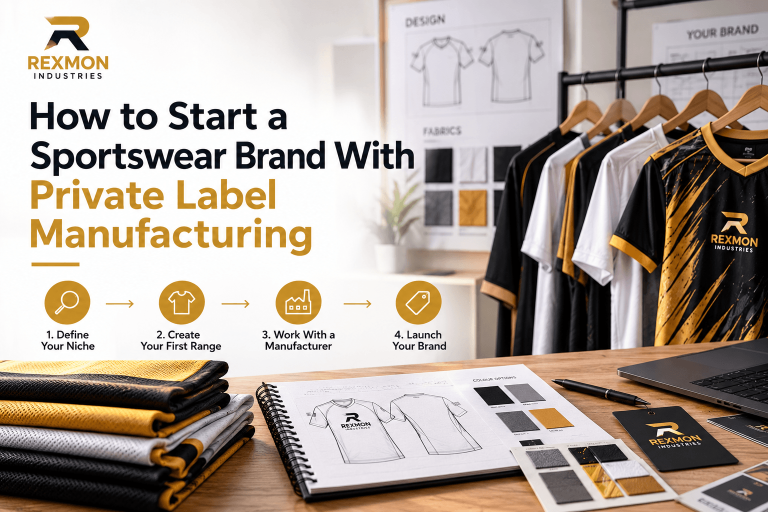
If you have ever asked a manufacturer how your soccer uniforms are made, you have probably heard two phrases in the same conversation: “cut and sew” and “sublimation”. They sound like two competing methods, as if you have to choose one or the other. You do not. They are not rivals. They are two different jobs in the same factory, and a real custom uniform needs both of them.
The confusion is understandable — both phrases describe something that happens to fabric, and both are used to sell kit. But cut and sew is about how the garment is built, and sublimation is about how the design gets onto the fabric. Once you know which job each one does, the quotes, the samples and the sales talk all make a lot more sense.
This post explains what each term means, how the two work together in a real custom soccer uniform, and what to check before you order — so you can tell a factory that does both from one that only does half the job.
What Cut and Sew Means
Cut and sew is the oldest way to make a garment, and the name says exactly what happens. Fabric is cut into panels — a front, a back, sleeves, side pieces — and those panels are sewn together into a finished shirt, shorts or socks. The panels are cut to a pattern, which is the shape of the garment in a given size. A youth small and an adult extra large are not the same pattern stretched bigger; they are separate patterns, cut separately, so the fit stays right across the size range.
In a custom soccer uniform, cut and sew is where the fit is decided. The pattern decides how wide the shoulders are, how the sleeves sit and how long the body is, and whether the shirt is shaped for a mens, womens or youth player. A manufacturer that cuts its own panels controls the fit. One that buys finished blank shirts and only prints them does not — the fit was decided by whoever made the blank.
At Rexmon Industries, precision cutting is stage three of our six-stage production process. The printed fabric is cut into panels to size, with youth, womens and mens cuts made to their own patterns rather than scaled from a single template, then assembled on JACK overlock machines with reinforced flexible seams. Labels and tags are added at the same stage. That is the cut and sew part of your uniform: the panels, the seams and the shape.
Cut and sew on its own, though, does not put a design on the shirt. A cut and sewn shirt with no print is a solid colour — plain fabric in the shape of a jersey. The colour, the badge, the names and the numbers have to come from somewhere else. That somewhere else is the print method, and for custom soccer uniforms that method is usually sublimation.
What Sublimation Means
Sublimation is a printing method, not a way of building a garment. The design is printed onto transfer paper and then heat pressed onto the fabric. The heat turns the ink into a gas, and the gas bonds with the fibres of the fabric. The colour becomes part of the fabric itself, rather than sitting on top of it like a layer of paint.
That difference is why sublimation is the standard print method for custom soccer uniforms. Because the colour is in the fabric, it never cracks, peels or fades the way surface prints do. There is no limit on the number of colours and no extra cost for a complex design, so a detailed crest, a gradient and a full-colour pattern all print the same way. The print covers the whole garment edge to edge, including the sleeves and side panels, because the design is printed onto the fabric before the panels are cut.
At Rexmon Industries, sublimation is stage two of our production process, right after the artwork is prepared. Colours are calibrated, and names, numbers and logos are laid out on the design before anything is printed. Then the design is printed and heat pressed onto the fabric. Nothing moves to cutting until the print is right, and nothing moves to print until you have approved the mockup. Full detail on the method is on our sublimation printing page.
Sublimation on its own, though, does not make a shirt either. A printed piece of fabric is still a flat piece of fabric. It has to be cut into panels and sewn into a garment before anyone can wear it. That is the cut and sew half of the job, and it is why the two terms always appear together.
How the Two Work Together in a Real Custom Uniform
A real custom soccer uniform is not made by one method or the other. It is made by both, in a fixed order. Here is how the work runs through our facility in Sialkot, Pakistan:
| Stage | What happens | Cut and sew or sublimation? |
|---|---|---|
| 1. Design preparation | Colours are calibrated, and names, numbers and logos are laid out on the design | Neither yet — the artwork is prepared for print |
| 2. Print and heat press | The design is printed and heat pressed onto the fabric | Sublimation |
| 3. Precision cutting | The printed fabric is cut into panels to size | Cut and sew |
| 4. Assembly | Panels are sewn together on JACK overlock machines, with reinforced flexible seams | Cut and sew |
| 5. Hand checking | Every piece is checked by hand for print accuracy, stitching, sizing and finish | Quality control on both |
| 6. Packing and shipping | Kits are sorted and bagged by player, labelled and shipped with tracking | Neither — the finished garment is packed |
The order matters. The design is printed onto the fabric first, while the fabric is still flat, so the print can run edge to edge. Then the printed fabric is cut, so every panel carries its part of the design right to the seam. Then the panels are sewn, so the design lines up across the shoulders, the sides and the sleeves. If the order were reversed — cut first, print second — the design could not reach the edges, and the seams would cut through the middle of the print.
That is also why the fabric matters. Sublimation works on the polyester-based fabrics that soccer kits are made from: our Standard Interlock at 150 gsm, Premium Micromesh at 160 gsm, Pro Lightweight at 135 gsm and Performance Knit at 170 gsm. The shorts and socks are matched to the jersey fabric family, so the whole kit feels like one garment.
What Changes If a Manufacturer Only Does One Half
Some suppliers only do half the job, and it shows in the kit. A supplier that prints but does not cut and sew is working with finished blank shirts. They can put your design on the front of a shirt, but they cannot change the fit or the shape, and they cannot print edge to edge, because the shirt is already sewn. The print sits in the middle of the chest, inside the seams, and the sleeves and side panels stay plain.
A supplier that cuts and sews but does not sublimate has to put the design on another way. That usually means vinyl lettering, heat transfers or embroidery. Vinyl and transfers sit on the surface of the fabric, so they can crack and peel over a season of washing and play. Embroidery works for a small crest, but it cannot cover a whole shirt with a full-colour design, and it adds weight and stiffness where it sits.
A manufacturer that does both — prints the fabric, cuts the panels, sews the garment — controls the whole result. The design reaches every edge, the fit is cut to pattern, and the print, the fabric and the seams all come from the same factory. That is the standard to hold any manufacturer to. You can see our production floor for yourself on our factory tour page.
Why the Distinction Matters When You Order
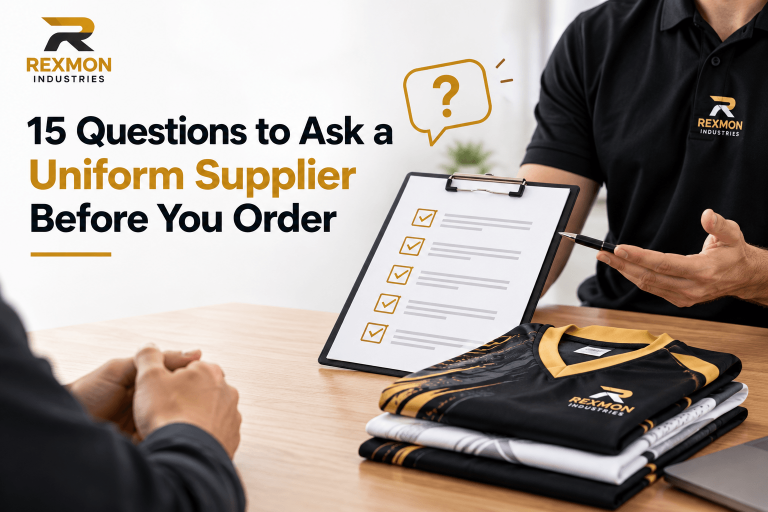
Knowing the difference between cut and sew and sublimation changes the questions you ask, and the answers tell you what kind of manufacturer you are dealing with.
Is the fabric printed before it is cut? If yes, the design runs edge to edge and the print covers the sleeves and side panels. If no, the print is added to a finished garment and stays inside the seams.
Who cuts the panels? A manufacturer that cuts its own panels controls the fit and the size range. Ask whether youth, womens and mens cuts are made to their own patterns. Ours are — one design runs from Youth XS to Adult 5XL, with mens, womens and youth cuts, and the patterns are not scaled from a single template.
How are the seams finished? Reinforced flexible seams hold up to match play and regular washing. Ask what machines do the assembly. Ours are JACK overlock machines, and every piece is checked by hand before it is packed, with anything short of the standard remade, not shipped.
Can I approve a sample? Before a full order, you can approve a physical sample for fabric, fit and print. A manufacturer that does the whole job in house can show you a sample made the way your order will be made. A reseller cannot.
These are the same questions our manufacturer page answers in full — capacity, machines, process and quality control, all in one place. If you are comparing manufacturers, that page is the clearest test: a real capacity number, a named machine list, and a quality check on every single piece.
Get Your Custom Uniform Quote
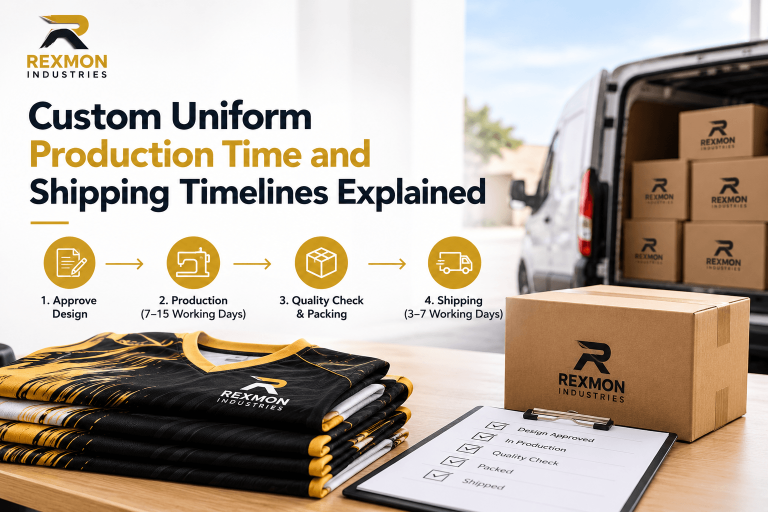
Every order starts with a free design mockup, delivered within 24 hours, with unlimited revisions until you approve it. Send your colours, your crest or logo, and your names and numbers, and we will show you exactly what your kit will look like before anything is printed. There is no minimum order — one piece or a full club — and production takes 7 to 15 working days after approval, with every piece checked by hand before it is packed.
Request your free mockup and your quote on the get a quote page, or contact us directly at +92 324 975 9125 or contact@rexmonindustries.com.