
Bulk Soccer Uniform Orders for Leagues and Tournaments: A Complete Guide
A twenty team league order is not twenty club orders stapled together. The manufacturing is the easy part. What breaks a bulk programme is coordination: twenty sets of artwork opinions, twenty size lists arriving over five weeks, and a delivery that arrives as one pallet nobody can sort. This guide covers how to structure the order so the volume works for you rather than against you.
One Base Design, Many Colourways
The single most effective decision in a bulk programme is to run one base design recoloured per team rather than a unique design per team. It cuts the approval workload from twenty conversations to one, it makes the competition look like a competition rather than a car boot sale, and it removes the artwork bottleneck entirely.
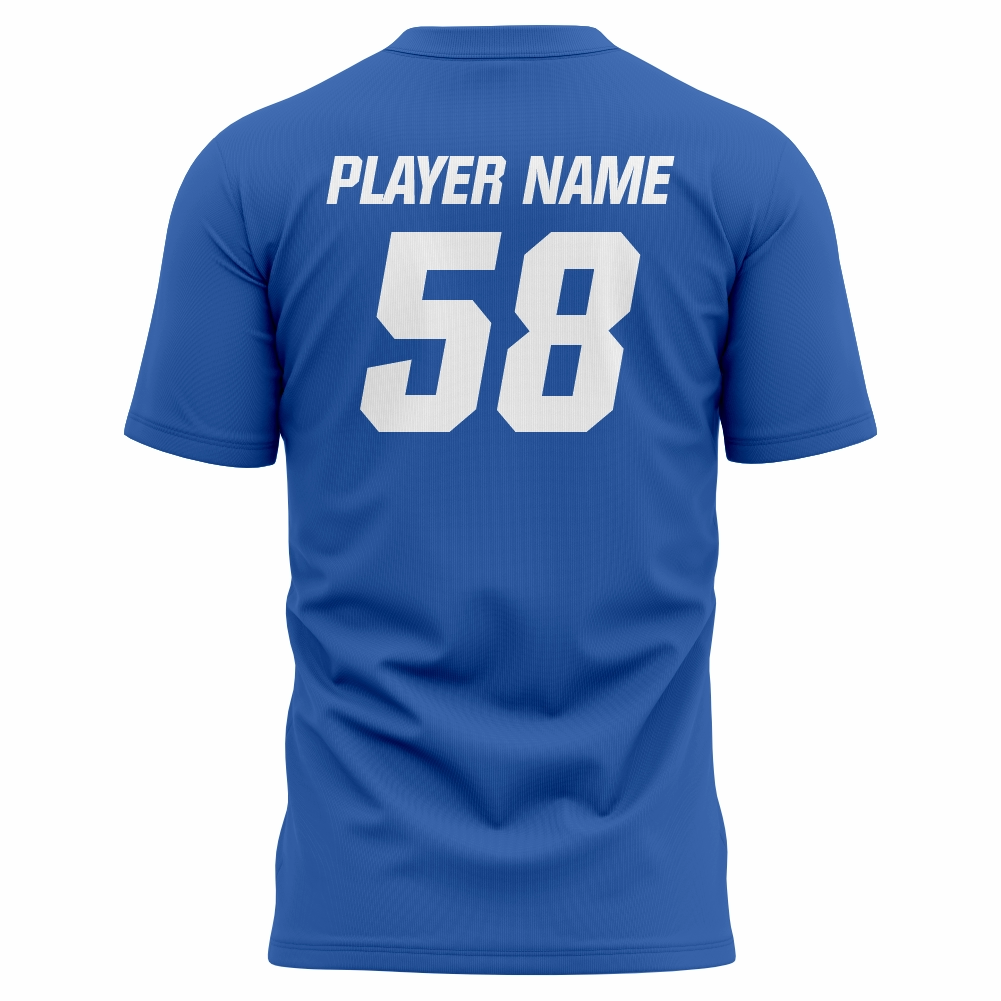
Because sublimation places no limit on colours and carries no screen charge, a recolour is genuinely just a recolour. Twenty colourways of one pattern cost the same to print as twenty of the same colour. Start from the existing design collection and nominate two or three candidates, then let teams choose their palette inside the chosen pattern rather than choosing the pattern itself.
Where teams insist on their own crest, that is fine and normal. Crests vary per team, the pattern does not.
Size Ratios Versus Name by Name Lists
For a club order you collect a size per player. For a league or tournament that is often impossible within the timeline, so the alternative is a size ratio per team.
A ratio expresses a team's order as a distribution rather than a list, for example two small, six medium, six large, three extra large, one double extra large for an eighteen piece run. It is faster to collect, easy to compare across teams, and good enough for training kit and tournament shirts that do not carry player names.
- Use name by name lists whenever shirts carry player names and numbers
- Use ratios for tournament shirts, officials, volunteers and training stock
- Send Rexmon your measurements and the size ratio can be built for you free of charge
- Add a small buffer of middle sizes at programme level rather than per team
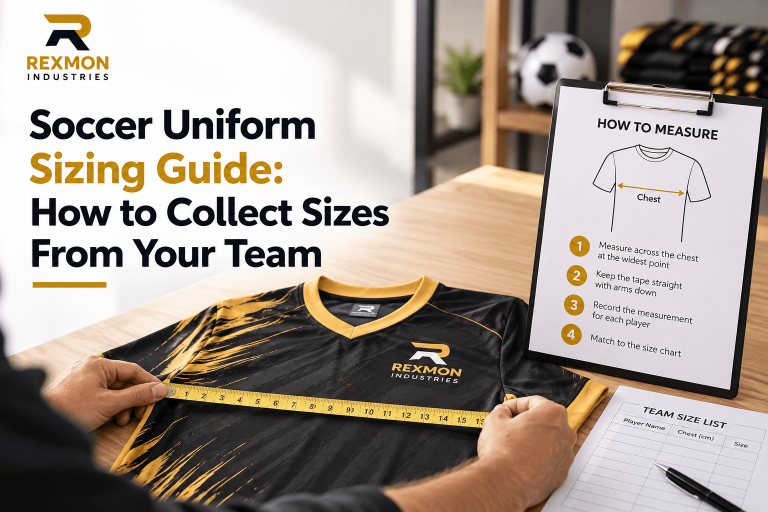
The measurement method behind either approach is in the sizing guide, and the charts sit on the size guides page.
Packing and Labelling So the Delivery Sorts Itself
This is where bulk orders quietly fail. A correct order that arrives as an unsorted pallet costs a weekend of volunteer time, and every complaint that follows is attributed to the factory.
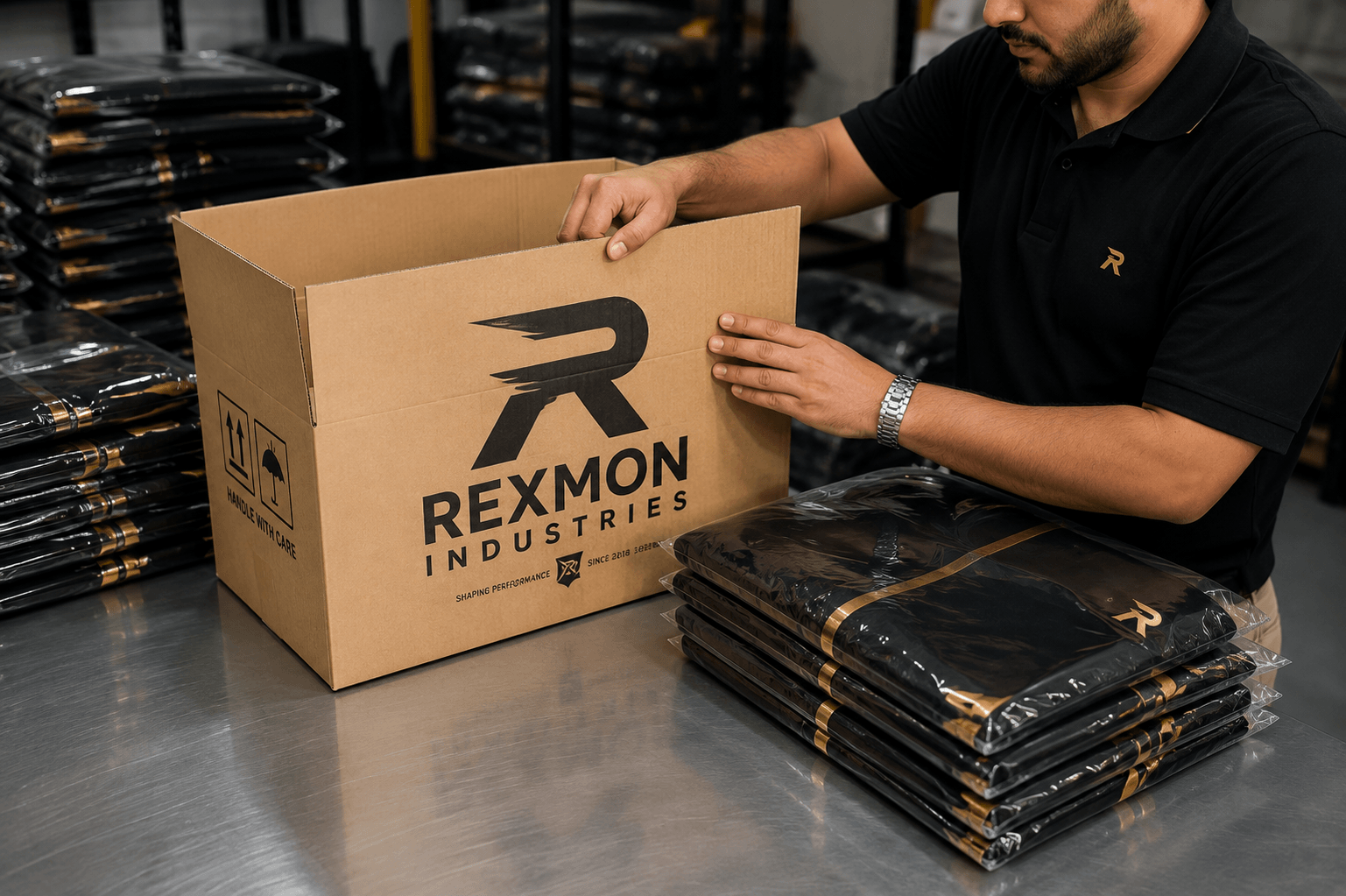
Decide the packing structure at the quote stage, not after production. Orders can be packed and labelled per player, per team or per venue, and shipments can be split across multiple addresses. Ask for each carton to carry the team name and its contents on the outside, and for the packing list to be sent ahead of the pre shipment photos so your distribution plan is ready before the shipment lands. Cartons are audited at random against the packing list, size ratio and labelling before sealing, and photos of the packed order are sent before dispatch.
Timelines for a Multi Team Programme
Production of a large run is not proportionally slower, but approvals are. Allow eight to ten weeks end to end and treat the first three as coordination rather than manufacturing.
| Weeks | Focus | Owner |
|---|---|---|
| 1 to 2 | Base design chosen, colourways drafted, ratios requested | Programme lead |
| 3 | All colourways and crests approved in one written sign off | Programme lead |
| 3 | Deposit cleared, day zero | Organiser |
| 4 to 6 | Production, inspection, packing per team | Factory |
| 7 to 8 | Freight and customs | Carrier |
| 9 to 10 | Distribution buffer | Organiser |
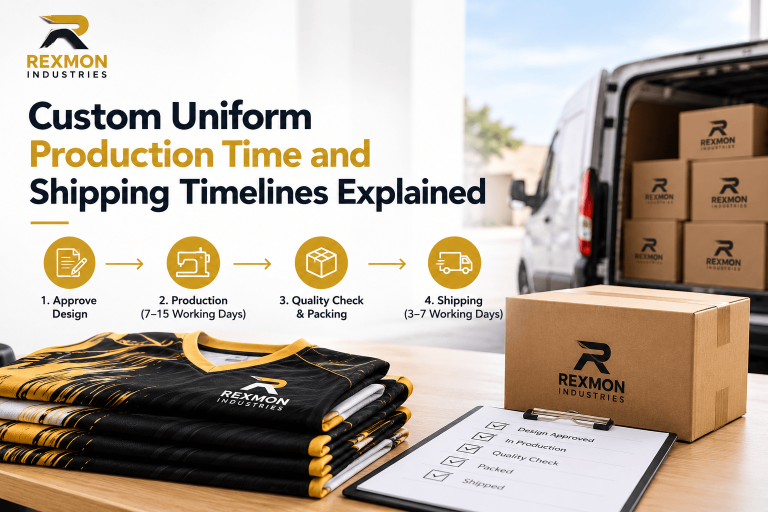
Larger programmes have their exact date confirmed in writing before production starts. Freight choice matters more at volume, since air freight at seven to twelve working days becomes cheaper per kilogram than courier on heavy shipments and sea freight at twenty five to forty five days is the lowest cost per unit when planned ahead. The day by day breakdown is in the production and shipping timelines guide.
Appoint One Approver and One Deadline
Every bulk programme that runs late has the same cause, which is distributed approval. Twenty coaches with an opinion and no deadline will consume six weeks without producing a decision.
- Name one programme lead with authority to approve artwork on behalf of every team.
- Give teams a fixed window to submit crest files, colour choices and ratios, and publish the cut off.
- Assign a default to any team that misses the window rather than holding the programme.
- Approve every colourway in one written sign off, checking crest versions and spellings team by team.
- Freeze changes after day zero, because a change at that point moves the delivery date for everyone.
Pricing, Quality and What to Verify at Volume
Volume improves the price per piece, and the honest way to find your number is to ask where the breaks fall across the whole programme rather than per team. A league buying as one order almost always lands in a better bracket than the same teams buying separately, which is a good argument for centralising the purchase even when teams fund their own share.
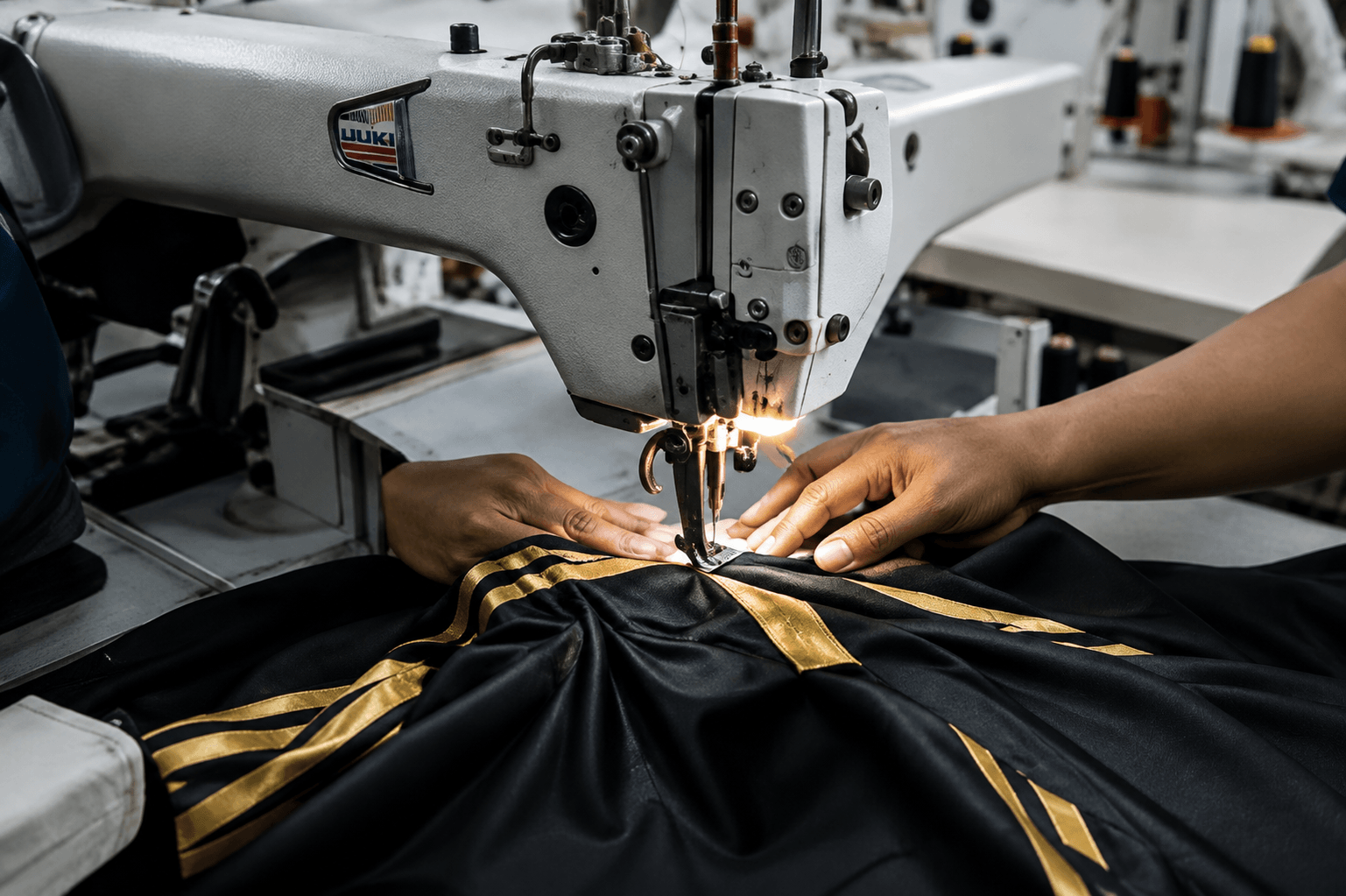
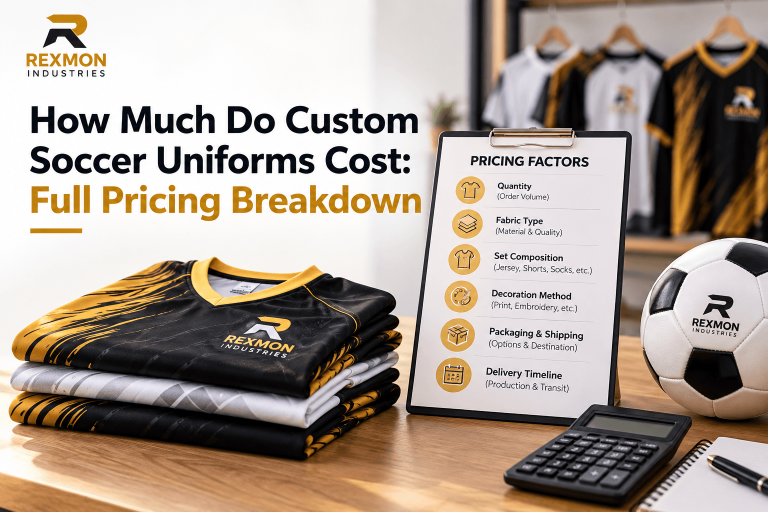
At volume, consistency matters more than any single garment. Every roll is inspected for shade variation before cutting, a floor inspector samples the line hourly, and every finished piece is checked individually before folding, with a measured bulk defect rate under 0.8 percent. Ask for a production sample of the base design before the full programme runs, since the cost is credited against the bulk order in most cases. The full inspection ladder is on the quality control page, the cost drivers are in the pricing guide, and the supplier vetting list is in questions to ask a uniform supplier.
Key Takeaways
- Run one base design recoloured per team instead of a unique design per team.
- Use size ratios for tournament and training stock, and name by name lists only where names are printed.
- Decide packing and labelling per team at the quote stage so the delivery sorts itself.
- Allow eight to ten weeks, with the first three spent on coordination rather than manufacturing.
- Appoint one approver with authority for every team and publish a hard submission cut off.
Frequently Asked Questions
Is it cheaper for a league to order centrally?
Almost always. One combined order lands in a better quantity bracket than the same teams buying separately, even when each team funds its own share.
Can every team have a different colour?
Yes, and it costs nothing extra. Sublimation places no limit on colours and there are no screen charges, so twenty colourways of one base pattern print at the same rate as twenty identical shirts.
Can the shipment be split between teams or venues?
Yes. Orders can be packed and labelled per player, per team or per venue and split across addresses. Arrange it at the quote stage so packing is set up correctly from the start.
What is a size ratio and when should we use one?
A ratio expresses a team's order as a distribution of sizes rather than a list of players. Use it for tournament shirts, officials and training stock, and use name by name lists whenever shirts carry player names.
How long should we allow for a twenty team programme?
Eight to ten weeks end to end. Production is not proportionally slower at volume, but collecting crests, colours and ratios from many teams is what consumes the first three weeks.
Can we see a sample before the full run?
Yes. A production sample of the base design is recommended for any large programme, and its cost is credited against the bulk order in most cases.
Ready to Price Your Team Kit?
Send your crest, your rough idea and your quantity and Rexmon comes back with a full colour mockup within 24 hours and a written quote in about one working day. There is no minimum order, no setup fee and no screen charge, so a single keeper shirt and a 200 piece club order are both welcome.

One Comment